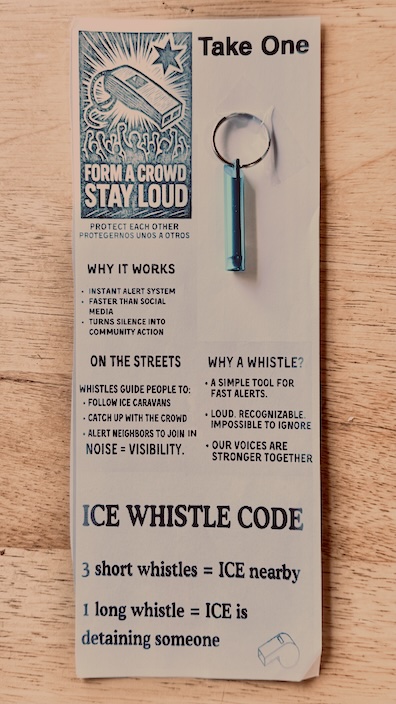
By wearing this whistle we will call for our communities to take action. We let those in our neighborhood know that we support them and hate is not welcome. And that we will take action. Some of us are not brave enough to personally intervene, but we will be watching and gathering evidence with our cell phones, others will quietly go into their houses and will call for help. We will get financial support and we will wear these whistles in solidarity. Hanging a bright party favor whistle in your window, from your porch, from a tree lets people know that this is a neighborhood that cares. These whistles don’t make a lot of noise, but they are symbolic.
Community Whistle Solidarity Initiative: A Step-by-Step Guide
Distributing symbolic whistles in your neighborhood is a powerful, practical way to show solidarity, deter hate, and build a mutual support network. With thoughtful planning, clear messaging, and community engagement, your initiative can foster safety, connection, and collective action.
To successfully launch a community whistle distribution initiative that promotes solidarity against hate and builds mutual support, follow these steps: plan an inclusive event, source and customize symbolic whistles, communicate their meaning clearly, coordinate with local organizations, and ensure legal and safety best practices. Drawing on real-world examples and expert guidance, this comprehensive guide provides actionable steps, resource contacts, and practical advice to help you create a visible, supportive, and resilient neighborhood network.
1. Planning Your Whistle Solidarity Event
Define Your Purpose & Goals
- Clarify your message: The whistle is a symbol of mutual protection, readiness to act, and a visible stand against hate.
- Set clear goals: For example, “Distribute 100 whistles and connect 50 neighbors in a mutual support network.”
Involve the Community
- Form a planning team: Include neighbors with diverse backgrounds and skills.
- Gather input: Use informal chats, surveys, or focus groups to ensure the event reflects local needs and values.
Logistics & Scheduling
- Choose an accessible location: Parks, community centers, or faith-based spaces work well.
- Assign roles: Volunteers for welcoming, distribution, explaining the initiative, and safety.
- Ensure accessibility: Consider mobility, language, and sensory needs.
2. Sourcing & Customizing Whistles
| Whistle Type | Price (Bulk) | Customization Options | Best For |
| Plastic (basic) | $0.03–$0.20 | Color, logo, lanyard | Large-scale distribution |
| Metal (engraved) | $0.50–$1.50 | Engraving, color, attachments | Premium/smaller groups |
| DIY (PVC, clay, 3D) | <$1 | Paint, stickers, engraving | Community art projects |
- Bulk suppliers: DiscountMugs, Underabuck, Wholesale-Carabiners, PromotionalGift4U.
- Customization: Add slogans (“Solidarity Against Hate”), community colors, or QR codes linking to resources.
- DIY options: PVC, tin can, or clay whistles for creative, hands-on events.
Tip: Include an info card or mini-zine with each whistle explaining its meaning and how to use it.
3. Communicating the Symbolic Meaning
- Opening remarks: Share a story or speech about why the whistle matters and how it signals support and readiness to act.
- Written materials: Distribute flyers or cards with each whistle, explaining:
- The whistle’s symbolism
- How to use it (e.g., wear it, use in emergencies, show support)
- What to do if you witness or experience hate (call for help, document safely, support each other)
- Visuals: Use posters, banners, and social media hashtags to reinforce the message.
4. Legal & Safety Best Practices
Documenting and Responding to Incidents
- Right to record: You can document incidents in public spaces, but do not escalate or endanger yourself or others.
- Preserve evidence: Save original files, note details (date, time, location, statements).
- Reporting: Use 911 for emergencies; for non-emergencies, report to local police or hate crime hotlines (e.g., CA vs Hate: 833-866-4283).
Bystander Intervention
- 5Ds Method: Distract, Delegate, Document, Delay, Direct. Only intervene directly if safe.
- Training: Free bystander intervention trainings are available from organizations like Right To Be (righttobe.org).
Community Watch
- Non-confrontational: Observe, document, and report—avoid direct confrontation.
- Communication: Set up group texts or phone trees for rapid alerts.
5. Real-World Examples & Lessons Learned
| Initiative | Symbolic Item | Impact & Lessons Learned |
| Yellow Whistle Campaign | Yellow whistles | Raised awareness, empowered communities, combined symbolism with practical safety |
| LA vs Hate: Signs of Solidarity | Yard signs, posters | Transformed neighborhoods, encouraged reporting, built resilience |
| Hope Against Hate (AAF) | Safety resources | Trained thousands, built mutual aid networks, used multilingual outreach |
Symbolic items are most effective when their meaning is clear, widely adopted, and paired with concrete actions like safety training and mutual aid.
6. Organizational Support & Resources
| Organization | Website/Contact | How They Can Help |
| Anti-Defamation League (ADL) | adl.org | Victim support, education, advocacy |
| Right To Be (Bystander Training) | righttobe.org | Free bystander intervention training |
| Local Mutual Aid Networks | (varies) | Resource sharing, event support |
| LA vs Hate | LAvsHate.org | Solidarity campaigns, reporting, community support |
| CA vs Hate Hotline | 833-866-4283 | Reporting, victim support, resources |
Tip: Reach out to these organizations for materials, training, or collaboration.
7. Actionable Steps for Your Initiative
- Form a planning group and define your goals.
- Source and customize whistles (bulk order or DIY).
- Plan an accessible event with clear roles and safety protocols.
- Communicate the meaning of the whistle—verbally and in writing.
- Distribute whistles with info cards and encourage visible wearing.
- Establish a communication plan (group text, phone tree) for rapid alerts.
- Promote bystander intervention and safe documentation practices.
- Connect with local organizations for support, training, and resources.
- Collect feedback and share stories to sustain engagement.
8. Visual Inspiration
Example: Yellow Whistle Campaign
9. Conclusion
By distributing symbolic whistles and fostering a culture of mutual support, you empower your neighbors to stand together against hate, watch out for one another, and take collective action. With clear planning, strong messaging, and community collaboration, your initiative can create a safer, more connected neighborhood where everyone knows they are supported—and that hate is not welcome.
Summary:
- Plan inclusively and communicate clearly
- Source and customize symbolic whistles
- Distribute with purpose and provide info
- Promote safe, legal action and bystander support
- Connect with organizations for resources and training
- Sustain engagement through feedback and storytelling