
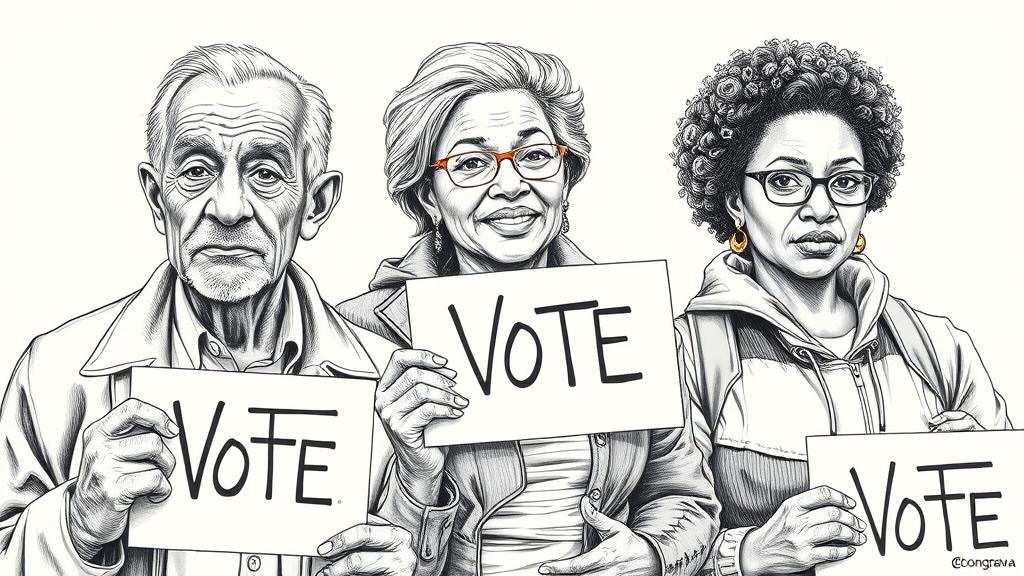
Let’s Save Democracy
At 250 America is at a Crossroads. What is the state of American democracy as it approaches its 250th anniversary? We must resist tyranny, face the current challenges posed by executive power and judicial decisions, and preserve civil rights.
Why Act Right Now?
While it is important to avoid overusing the term “fascism,” recognizing its historical characteristics can help identify warning signs in modern societies. The U.S. faces challenges to its democratic institutions, but these are not identical to historical fascism. Instead, they reflect broader trends toward authoritarianism and political polarization that require vigilance and active civic engagement to address.
Fascism is a complex political ideology that emerged in the early 20th century, most notably with Benito Mussolini’s regime in Italy and Adolf Hitler’s Nazi Germany. It is characterized by authoritarianism, nationalism, suppression of dissent, and a focus on centralized control, often under a single leader.
Countries with authoritarian tendencies—such as Hungary, Turkey, or Russia—are often cited as modern examples of governments that selectively adopt fascist-like characteristics without fully embracing the historical model of fascism.
Have you noticed any of these authoritarian signs since January 2025 when Donald Trump took office with his 2025 Playbook?
– Authoritarian Rule: A strong leader or government that seeks total control over political, social, and economic life.
– Nationalism: Exalting the nation or race above all else, often accompanied by xenophobia or racism.
– Suppression of Opposition: Restricting or eliminating political opposition, free speech, and independent media.
– Militarism: The glorification of military strength and often an expansionist foreign policy.
– Corporatism: Merging the interests of government and business, often at the expense of individual rights.
This is what has been noticed by others
On December 23, 2020 when Fox’s Sean Hannity asked if he wanted to be a dictator Trump said no, except for day one.
Donald Trump has frequently praised Vladimir Putin and Kim Jon Un as strong, smart, and tough leaders, stating that he gets along better with leaders “the tougher and meaner they are.”
RESISTING TYRANNY
Challenges Posed By Executive Power & Judicial Decisions
Current U.S. Congress acts as a “pathetically weak” body that has abandoned its constitutional check on the executive branch.
The Supreme Court decision granting the President absolute and total immunity, stating it removed essential democratic guardrails.
Executive corruption and the need to clarify immunity limits.
Supreme Court voting rights ruling caused the largest reduction in minority representation since the end of Reconstruction.
Systematic erasure of Black political representation.
Republicans have redrawn congressional maps – reform gerrymandering. Protect voting rights.
The Improvement of Life
Housing and healthcare costs federal contractors discriminating based on race, religion, or sexual orientation.
Ending of enforcement of the Fair Housing Act of 1968 and rescinded rules prohibiting segregated facilities for government contractors.
What Has Happened and What Are We Doing
Benjamin Franklin in 1787 described the U.S. government as “a republic, if you can keep it.”
Historically, fascism arose in response to social and economic instability after World War I, as people sought strong, decisive leadership to address crises.
The Scenario
- A presidential candidate has won the election and gained control over all branches of government.
- The new administration refuses to follow court rulings and historical norms.
- Democratic processes and checks and balances have broken down.
- The leadership style is modeled after authoritarian regimes like Russia, North Korea, and China.
This situation represents a significant threat to democratic institutions and the rule of law, which are fundamental to a functioning democracy.
When the choice is tyranny or revolution, to keep your head in the sand is to choose tyranny. If you choose revolution the question is nonviolent or violent.
In such a scenario, grassroots movements and civil society organizations face a critical decision: whether to accept the new regime or to resist. Based on historical examples and research on civil resistance, there are several potential courses of action:
Nonviolent revolutions have endured longer
Historically, nonviolent revolutions have been more successful and led to more stable democratic outcomes than violent uprisings. Research by Erica Chenoweth and Maria J. Stephan has shown that nonviolent campaigns are twice as likely to succeed as violent ones.
Strategies for nonviolent revolution: Choices Now: Tyranny or Revolution?
Violent revolution as a Last Resort
While violent revolution might seem like an option, it’s important to note that:
- Violent uprisings are statistically less likely to succeed than nonviolent movements.
- They often lead to prolonged conflict and instability.
- Violent revolutions can delegitimize the movement in the eyes of both domestic and international observers.
- They may provide justification for increased repression by the regime.
What has happened
Most of those who witnessed the horrors of fascism have passed on. For those of you who do not have the visual graphic images go to NETFLIX and view some of these films.
- Hitler and the Nazies
- Nuremberg
- All the Light We Cannot See
- Hitler’s Circle of Evil
- Ordinary Men
- Forgive Us Our Trespasses
- The Liberator
- World War II from the Frontlines
- Camp Confidential
- Will
- Anne Frank
- Hitler: A Career
- My Name Is Vendetta
- The Longest Day
- WW II: Witness to War
- WW I The War to End All Wars
- The World War: 1914-1945
Action Items You Can Do
Three members of our community have stepped up to keep our government a republic and are paying the price. They spoke at “A Night of Resistance: Support for the Spokane 3”. Here are the editor’s interpretation of their thoughts and feelings.
The Spokane 3
Jac Archer
- Challenged political narratives that label immigrants and religious minorities as “criminals” or “terrorists.”
- Asserted the principle that “no man is my enemy,” applying it even to fascists and law enforcement officers.
- Argued that empathy is a necessity for community health rather than a weakness to be stamped out by nationalists.
- Defined true freedom as access to clean air, clean water, food, and the ability to raise a family without fear.
- Rejected the sentiment of returning to “normal,” stating that pre-existing social standards were insufficient.
- Characterized current political chaos as an opportunity to “till the soil” and build new, desired community structures.
- Noted the importance of the upcoming primary and November election cycles in determining the future.
- Emphasized that community consistency and the choice to love neighbors serve as the primary defense of freedom.
Justice Forral
- Identified 9/11 as the major turning point for the country and linked the rise of the Patriot Act and mass surveillance to the era of “The Clapper.”
Do you remember when you could clap your hands and the lights would come on? You clapped them again and the lights would go off? - Comparing the lack of artistic tools for children to the lack of revolutionary tools for citizens, he compared an elementary school teacher teaching kids how to draw with crayons and with the art of Kahlo, Dali, da Vinci.
- He illustrated the difference between true revolutionary tools and those used by the CIA. True revolutionary tools are listening to those in your community, connecting to the person next to you, finding ourselves in the other and choosing love over fear. The CIA uses tools of separation, division and alienation.
- Urged the audience to talk to people who need love and understanding rather than siloed opinions.
Bajun Malvawalla
- He didn’t come with a prepared speech, but was just winging it. Which, he said, is what he did when he showed up at the June 11, 2025 ICE protest.
- – He acknowledged the tireless work of the Peace & Justice Action League (PJALS) and the Spokane Three Support Group.
- – Bajun emphasized that the decision to fight the case in court aimed to challenge deeply ingrained systemic injustices.
- – He encouraged attendees to find community and engage in activities they love to combat the fear of fascism.
- – Bajun urged the audience to stand up for those who have been taken by ICE or cannot be present because of personal risks.
- – He called for community members to find common ground to defeat movements based on exclusion and discrimination.
- – Bajun stressed the importance of voting and maintaining strong social ties with neighbors and family.
how advocates are made
It’s easy to put your head in the sand when the issues don’t affect you directly. But sometimes they will be brought to you as they were brought January 6 2021 these law enforcement officers. This is an example of how advocates are made.
Capitol Police Officers Eugene Goodman, Harry Dunn & Aquilino Gonell, Metropolitan Police Officers Daniel Hodges & Michael Fanone
- Eugene Goodman on January 6, 2021 diverted a mob away from the Senate chamber.
- In 2024, Hodges, Dunn &Gonell campaigned for the Joe Biden 2024 presidential campaign; when Biden dropped out of the race, they campaigned for Kamala Harris’ campaign.[They also appeared in a TV ad targeting Arizonans that highlighted various threats made by Trump.
- On the third night of the 2024 Democratic National Convention in Chicago, Gonell spoke to the delegates. He spoke of his experience on January 6 and declared that Trump had betrayed the country.
- Harry Dunn has been very outspoken against the Capitol attack, testified before the House January 6th Committee, publicly condemned President-elect Trump, and ran for Congress in Maryland.
- In May 2026, Hodges and Dunn filed a federal lawsuit in the District of Columbia seeking to dissolve the Trump administration’s Anti-Weaponization Fund.
- Ahead of the second anniversary of the January 6 United States Capitol attack, Fanone wrote a letter, signed by more than 1,000 veterans, law enforcement, active military members and family, calling on Republican leadership in the United States House of Representatives to denounce political violence.
I have completed my ballot. I will be dropping it in the mailbox.