Northwest Black Pioneer: Peter Barnabas Barrow

By Patricia Bayonne-Johnson

Peter Barnabas Barrow was one of many African Americans who migrated to the Pacific Northwest and made a tremendous contribution to the development of the Spokane area.

 Born a slave near Petersburg, Virginia in 1840, Peter was taken to a plantation near Cosita, Alabama. He ran away when the Union Army came through the area early in 1864 and enlisted in Company A, 66th U.S. Colored Infantry on March 11, 1864 when they reached Vicksburg, Mississippi. Peter was appointed Sergeant on November 1, 1865. He served in Louisiana and Arkansas during the remainder of the war. He remained in the Union Army until March, 1866.

After the war, Peter married Julia, settled in Vicksburg and became active in politics.  Peter served as a member of the Mississippi House of Representatives and afterwards as a senator from the district of Vicksburg during reconstruction. Sensing that life was not going to get better in Mississippi, Peter moved his family to Deer Park, Washington, in 1889.  Expressing his fondness for the Northwest at a black voters’ meeting in 1890, Peter announced, “I jumped out of hell and landed in heaven on both feet.” Peter Barrow’s political activities included founding the John Logan Colored Republican Club and being nominated for office by the Populist Party.

Peter became one of the first black landowners in Stevens County, cultivating a huge irrigated apple orchard and was a leader in the Farmers Alliance movement.   Under his direction, the Deer Lake Irrigated Orchards Co. was formed. It was the largest operation of its kind in the Inland Empire and employed about 100 black men. Winter apples were grown and were exported all over the country.

In 1890 Peter Barrow became one of the founders and pastors of Calvary Baptist Church, Spokane’s first black church. He served as pastor from 1895 to 1906. The church is currently located at 213 E. Third Ave.

In 1892 Rev. Barrow moved his family to a house he built at E 2417 Second in Spokane. He and his wife, Julia, had six sons and one daughter.

The Barrow family gave the black community The Citizen, a newspaper published by Charles Barrow, which chronicled the history of Spokane’s black community.  Charles and Olive Barrow are the parents of Eleanor Barrow Chase, wife of James Chase, Spokane’s first and only African American mayor.

Reverend Peter Barnabas Barrow was killed in a streetcar accident on July 28, 1906 while attending a church convention in Tacoma.  He is one of the 12 bronze busts honoring early business and community leaders on the east side of the Spokesman-Review printing building at 1 North Monroe Street in Spokane, Washington. On the installation, “Builders and Leaders” also known as The Spokesman-Review Bronzes, Rev. Barrow is identified as a Pastor, Entrepreneur and a Publisher. I would add Politician and Civil War Veteran.

Note: This story was re-enacted at the 3rd Annual Walking with Ancestors at the Greenwood Memorial Terrace in Spokane on September 22, 2012. Walking with Ancestors is a program presented by the members of the Eastern Washington Genealogical Society who tell the stories of the people buried in the cemetery.  This year’s theme was “Remembering Our Civil War Ancestors.” I requested an African American man for my presentation and my “ancestor” was Peter Barnabas Barrow. I told Peter’s story as Eleanor, Peter’s granddaughter. Eleanor did not know her grandfather because he died in a tragic accident before she was born.

Sources:

Franklin, Joseph, All Through the Night: The History of Spokane Black Americans, 1860-1940 (Fairfield, Washington: Ye Galleon Press, 1989)

Taylor, Quintard, Barrow, Rev. Peter (1840-1906) The Black Past: Remembered and Reclaimed. Black Past.org (an online Reference Guide to African American History)

Peter B. Barrow, Deposition A, April 22, 1895, Civil War Pension File, NARA, Washington, D. C. , Fold 3.

HistoryLink.org; Jim Kershner

The After Life Of An AAVoice Staff Member

Student Studies in Zambia:
Lorenzo, Master of Arts in Transformational Leadership (MATL)

Lorenzo Herman, S.J. is a current student in the Master of Arts program in Transformational Leadership (MATL). We met with Lorenzo recently to learn about his summer trip to Zambia as a part of his internship requirement in the MATL program.

When Lorenzo began the program Fall of 2011, he said that his interest immediately peaked when Dr. Sharon Henderson Callahan, Associate Dean for Academics & Student Life, mentioned in orientation that the internship requirement for the MATL could be fulfilled nationally or internationally through the School’s interdisciplinary options– including through Seattle University’s Nonprofit Leadership, Public Administration, Business and Law programs among others.

For eight weeks this past summer, Lorenzo lived in, explored and researched in Lusaka, the capital city of Zambia, while traveling to other cities within the country on assignment. Lorenzo was based within the Jesuit Centre for Theological Reflection in Lusaka, a centre highly respected throughout Africa for its focus on advocacy for social conditions, faith and justice, outreach and economic efforts. Centre founder, Peter Henriot, S.J., has taught on social analysis at Seattle University School of Theology and Ministry over the years, and his social analysis method is used in the Master of Arts programs in Transformational Leadership, Pastoral Studies, and Transforming Spirituality as well as the Master of Divinity program.

The Centre, along with 26 other organizations that make up the Civil Society Constitution Coalition, is working rigorously with the Zambian government on the first draft of their Constitution and meets weekly at the Centre. 

Prior to his visit, Lorenzo had studied the Constitution at length, and upon his arrival attended meetings with key political figures and stakeholders. In the Constitutional framework, one priority was to include clauses of non-discrimination, including for individuals that have disabilities. The Coalition was finding that the families of individuals with disabilities were directly and indirectly affected by the Constitution, and needed explicit clauses of inclusivity and equality that were monitored and enforced in the community. There were not any representatives from the special needs population or service organizations in the Coalition at that time and some research was needed to further their work on the Constitution.

Lorenzo set out to visit the Ng’ombe compound in Lusaka as a part of this research. Many children throughout Zambia struggle with autism, learning disabilities, cerebral palsy, and down syndrome, among other special needs. There is a special needs school within Ng’ombe called Little Assisi Day School, run by an Irish Franciscan sister, Sister Helen Scully, who also has a background in special needs education. The staff at the school do far more than teach–providing extensive support to mothers and special needs children in the community: from teaching, to healthcare, to home visits, to providing basic supplies for the families.

Lorenzo visited the School and spoke extensively with its staff–asking if he might be able to  interview the mothers of special needs children to find out more about their experiences of medical and social systems in Zambia to provide recommendations to the Centre and Coalition in their work on the country’s Constitution. Lorenzo then interviewed 18 mothers, with the support of two incredible teachers at Little Assisi: Edith and Paula. Each mother that Lorenzo interviewed worked intermittently while living in the community, had 0-6 years of education, had high hopes for their children, families and community, and all experienced some form of discrimination, shame and guilt from their communities because of their children’s struggle. Some reoccurring themes in their stories included housing needs, the lack of food and medical care, desire for self-empowerment and entrepreneurship, and hopes for employment and better transportation. It took two days for Lorenzo to type out 55 pages of notes from these interviews, which he then presented to colleagues from the Centre for evaluation. After evaluating themes as well as their subtexts/contexts that illuminate further their similarities and differences, Lorenzo drafted a succinct list of recommendations for the Centre and Coalition in their work.

This experience is close to both heart and home for Lorenzo, since his sister Leslie was born with hydrocephaly and cerebral palsy, and has experienced multiple surgeries and medical treatments over her 26 years. She currently participates in integrated educational programs and social programs in the community, while benefiting from disability benefits in the United States. Lorenzo shared throughout his interviews of special needs children’s mothers, he often thought of his own mother and her strength and struggle in supporting his dear sister.

Below are photographs from Lorenzo’s trip.

Lorenzo presented his qualitative research study entitled “The Mothers of Children With Learning Disabilities in Lusaka, Zambia” at the School on Thursday, November 29th, from 4:30-5:30pm. The study’s objective was to use the collected information and to make recommendations to the Jesuit Centre of Theological Reflection and to those local and national disability advocacy groups to facilitate making recommendations to reduce the burden of disability discrimination and stigma in Zambia. The focus of this research study was to learn how mothers who have children with a learning disability are affected by their families, faith communities, medical and social systems.

FRESH OFF THE PRESS!
Since we interviewed Lorenzo, he has been elected as President of the National Black Catholic Seminarians Association (NBCSA), which seeks to contribute to the wellbeing of candidates for priesthood and religious life, with an emphasis on Black American, African, Afro-Caribbean, and Afro-Latino candidates preparing to serve the Church in the United States and its territories. The Association is an affiliate of the National Black Catholic Clergy Caucus. The National Black Catholic Seminarians Association also cooperates with the National Black Sisters Conference.

Lorenzo_Zambia1.jpg

From the Soweto Market (above and below)
Lorenzo_Zambia2.jpg


Lorenzo_Zambia3.jpg

Lorenzo comments on the above photo:
“I was walking home one day when I came upon these two boys in front of me. It was endearing to see the public affection they have for each other. They were inseparable and having a great time. I could not understand what they were saying because they were speaking Nyanja but their body language was endearing, playful, and sincere.”

Lorenzo_Zambia4.jpg

Lorenzo shares about this photo, above:
“I thanked the wonderful lady next to me who let me help sell her fish for a while. She thought I was weird for asking. — at Soweto Market.”


Rev. Al Sampson: A Voice for Action

Date:
Sun, 1938-11-27

Albert “Al” Sampson was born on this date in 1938. He is an African-American activist and minister.

Born in Everett, Massachusetts, he graduated from Everett High School in 1956, where he won the high school oratorical contest his senior year. While attending Shaw University, he was called to the ministry and received his B.A. in 1963. During that time, Sampson was president of the Shaw student body and the campus, city, and state chapters of the NAACP. He was arrested during Raleigh’s student sit-ins and was selected by his fellow students to introduce the first public accommodations bill in North Carolina history.

He became involved with the Southern Christian Leadership Conference (SCLC) in 1962 and served as campaign manager for Leroy Johnson, Georgia’s first Black state senator. Sampson was ordained by Dr. Martin Luther King, Jr., at Ebenezer Baptist Church in 1966. He earned his master’s degree in cultural studies from Governors State University in 1973 and his master’s of divinity from McCormick Theological Seminary in 1977. He also worked with the Reverend James Bevel to help organize Resurrection City for King’s Poor People’s Campaign.

He was Martin Luther King’s National Housing Director, traveling to Europe to look at Industrial Housing Systems. He brought the first model affordable home to Chicago’s West Side in a joint venture with the Amish Community of Nappannee, Indiana.

Reverend Sampson became pastor of Fernwood United Methodist Church in Chicago in 1975, where he continues today. He played an important role in the campaign of Mayor Harold Washington as a member of the Task Force for Black Political Empowerment.

Sampson is president of the National Black Farmers Harvest and Business Trade Cooperative and serves on numerous boards and organizations that stress the economic development of the Black community. Sampson is a former board member of the largest Black-owned bank in America, and held the position of International Vice-President for Training Allied Workers International Union (the only Black independent union recognized by the US Labor Department).

He is listed in “Who’s Who Among Black Americans” (1989-1995) and was one of the spokespersons for the first Million Man March in 1995. He served as a scholar- consultant for the Black Heritage Bible and is currently the president of the Metropolitan Council of Black Churches in Chicago.

Reference: Reverend Al Sampson

Star Tribune
Associated Press
425 Portland Av. S.,
Minneapolis, MN 55488

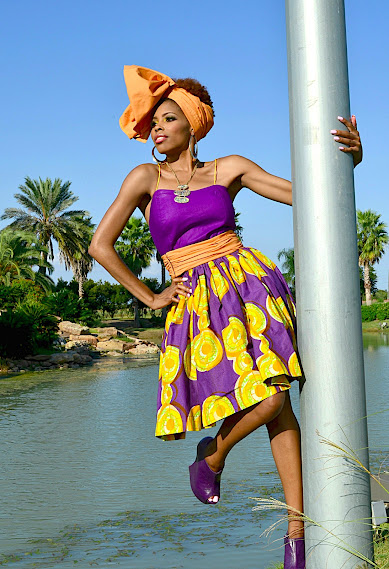
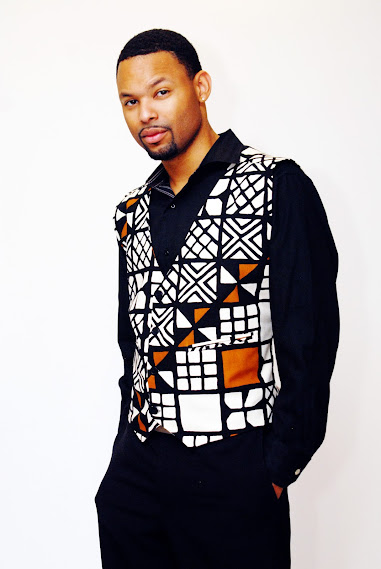
Spokane folk’s check out Irish’ Touch

Fresh, fun, eco-friendly clothing for …
Every woman…Every age…Every day!
Please join us for a kikaPaprika Show hosted by
IRISH’S TOUCH
Friday, November 30th, 4:00pm – 7:00pm
122 N. University Rd. Ste. #103
Spokane Valley, WA 99206
Bring a girlfriend or two & be ready to try on the latest designs from this fabulous new clothing line!
Please RSVP to me:
IRISH’S TOUCH at 509-928-6824 or irishstouch@kikapaprika.com

Presented by kikaPaprika Fashion Consultant
Irishs Touch
kikaPaprika is available exclusively through Independent Fashion Consultants.
Visit us online at http://IrishsTouch.kikaPaprika.com
Did you get dressed in a better world today?

The Role of Citizen in Our Democracy

The role of citizen in our democracy does not end with your vote. America’s never been about what can be done for us. It’s about what can be done by us together through the hard and frustrating, but necessary work of self-government. That’s the principle we were founded on.

Text of President Barack Obama’s speech after his re-election victory.


Thought you would enjoy this email from 2008

Good Morning My People –

After watching the final debate the other night, it dawned on me that Obama could actually win this thing.  If that happens, there will be a lot of people (some of our co-workers included) who will be afraid that an Obama presidency will usher in the end of days.  They’ll be watching us on November 5th (the day after the election) for signs of the end times.

To keep the peace and keep a lot of folks from getting nervous, I think we should develop a list of acceptable celebrations and behaviors we should probably avoid – at least for the first few days:

1.       No crying, hugging or shouting “Thank you Lord” – at least not in public

2         No high-fives – at least not unless the area is clear and there are no witnesses

3         No laughing at the McCain/Palin supporters

4         No calling in sick on November 5th. They’ll get nervous if too many of us don’t show up.

5         We’re allowed to give each other knowing winks or nods in passing.  Just try to keep from grinning too hard.

6.        No singing loudly, We’ve come this Far By Faith  (it will be acceptable to hum softly)

7.        No bringing of  barbeque ribs or fried chicken for lunch in the company lunchroom for at least a week (no chittlings at all) (this may make us seem too ethnic)

8.        No leaving kool-aid packages at the water fountain (this might be a sign that poor folks might be getting a break through)

9.        No Cupid Shuffle during breaks (this could indicate a little too much excitement)

10.      Please no Moving on Up music  (we are going to try to remain humble)

11.      No doing the George Jefferson dance (unless you’re in your office with the door closed)

12.      Please try not to yell—-BOOOO YAH!

13.      Just in case you’re wondering, Doing the Running Man, cabbage patch, or a backhand spring on the highway is 100% okay.

If I’ve missed anything feel free to add to the list. I just want to make sure we’re all on the same page when Obama brings this thing home on November 5th.

Now go get your early vote on and let’s make this thing happen=

George Washington in 1817.

Date:  Thu, 1872-11-07
On this date we recall the birth of George Washington in 1817. He was an African-American farmer, businessman and the founder of the town of Centralia, Washington.
Born a slave in Virginia, George Washington escaped and was raised by a white family in Missouri. Unable to attend school, he was tutored and eventually ran a sawmill in St. Joseph, MO. He struggled under the racial restrictions of that slave-holding state, and in 1850 joined a wagon train on the Oregon Trail. After reaching the northwest, George Washington again entered the lumber business and established a homestead on the Chehalis River. But his farm lay in the path of the Northern Pacific Railroad.
He and the company came to terms and with the settlement he received, Washington planned a new town in 1872. He called it Centerville, and he laid out 2,000 lots, setting aside sites for parks and churches. The town thrived, though the name was changed to Centralia.
George Washington spent the rest of his life there as an honored citizen. When he died in 1905, the town, 30 miles south of Olympia, shut down for a day of mourning. George Washington Park (named after him) is in the heart of Centralia, at Pearl St. and Harrison St.
Reference:
The Encyclopedia of African-American Heritage
by Susan Altman
Copyright 1997, Facts on File, Inc. New York
ISBN 0-8160-3289-0

Red State Blue State Screaming

Bob has photographed Jay in the red part of a Blue State

Jay Cousins

This election cycle has produced an angry red state blue state screaming match, where the middle of the US seems to hate both coasts, while the coasts deride and demean the values of those in the middle American states. So, I have an observation:The coasts are the most populous areas of the country, and how did they gain that distinction? Through the migration of the people who lived in those Plains states to either of the Coasts. This migration started during the Depression and continues today. A brief review of these changes might prove useful in providing some discussion points.

I will use the example of California as I am from there and know its population changes first hand.

In 1900, the population of California was, 1,485,000, by 1950 the population had risen to, 10,586,223, about a seven fold increase. This increase was due to a number of factors: The Depression, the Dust Bowl, WWII, and the idea that California was the land of sunshine and opportunity.

By 1970, the number of residents had risen to, 19,953,134, or close to doubling in just twenty years. When I moved away, in the late 70’s, the number had moved up to around 22,000,000. Today there are about 40,000,000 people who call California home. All of this later increase (post 1950) came about because California is seen as a beacon for a great many people; providing opportunity, and a more liberal, accepting place that allows for racial and religious and lifestyle differences to coexist with a minimum of friction.

Now, where did all of these people come from? Most of them migrated from the middle of the country. They are the children and relatives of the very people who deride and discount them today. This seems to me to be more than a little absurd. By the simple act of moving their location, they have become the enemy, the other. Are these people now seen as turncoats to the cause? What cause? Meanwhile, those new coast residents are now trying to shout down the very people they came from originally. This is funny, ludicrous and a bit sad.

Over the last thirty or so years, Californians have moved out of state; moving to Oregon and Washington in large numbers, resulting in those states becoming more liberal and more prosperous. When I moved to Spokane, I was met with several people who commented that since I was from California, I should move back there. After hearing this enough times to become annoying, I responded that I would, if they could get the million or so Washingtonians who had moved to California to move back to Washington. I didn’t move back, so I guess that the deal is off and they won’t move back either.

It does seem unfortunate that we are unable to remember that we all come from similar places and that we all live in one big place. We are so much poorer without each other.

LIUNA Endorses Obama


Laborers International Union of North America Endorses Obama

“President Obama has earned a second term as President,” said Terry O’Sullivan, LIUNA General President. “Despite unprecedented and unrelenting hostility from extremist Republicans determined to see him fail, President Obama has achieved many laudable goals. We think America needs a leader who will fight to create jobs and build a bigger middle class. It’s a no- brainer – Barack Obama is the only choice to lead this country for four more years.”


Making Spokane News

Spokesman.com – Oct. 17, 2012    http://www.spokesman.com/stories/2012/oc…    10/17/12
Cindy Hval Correspondent

Truck stops

Falling leaves and cooler temperatures indicate savvy diners need to get their food truck fix in while they still can. Three new mobile kitchens opened recently in Spokane, offering everything from familiar favorites like hamburgers and chicken wings, to exotic fare like stewed oxtail and curried goat. Most food trucks shutter their windows when the snow flies, but you’ve still got time to sample some tasty dishes from the latest additions to the mobile-dining scene.
The Jamaican Jerk Pan
Since The Jamaican Jerk Pan’s opening this spring, owner/operator Roian Doctor said, “I’ve been working like there’s five of me!” But it’s a labor of love for this Jamaican, who owns the truck along with his wife, Sabrina Sorger. Using spices imported from his homeland, Doctor offers authentic dishes like jerk chicken – smoked meat that’s rubbed with and marinated in a special blend of spices. “I’m giving you a taste of what I’m familiar with,” he said. Jerk chicken and curried chicken are always on the menu, as well as side dishes including rice and beans and cabbage salad. Doctor also serves festival – a fried bread, similar to Indian fry bread. “All of my side dishes are vegan,” he said. Adventurous eaters might want to try stewed oxtail. Doctor describes it as “a big chunk of meat with some gravy on it.” He also occasionally serves curried goat. The honey-citrus shrimp skewers have proved popular, too. Prices range from $5.50 for a bowl of curry chicken with rice and beans to a jerk chicken combo plate with three sides for $10.
Jamaican Jerk Pan will be up at Green Bluff near Knapp’s Farm during Apple Festival and offers catering services, as well. Doctor has been pleased with customer response. “All the people say good things about my food, which makes me feel good,” he said. “I tell my customers I cook a little piece of home for you guys to enjoy.” Jamaican Jerk Pan Location: Fourth Avenue and Cannon Street in Browne’s Addition Hours: Monday-Friday, 11:30 a.m.-8 p.m. Phone: (509) 795-9050 More information: www.facebook.com/TheJamaicanJerkPan (http://www.facebook.com/TheJamaicanJerkPan)
Thai Lunch Box
Thai Lunch Box owner Tom Pinyo isn’t new to the Spokane restaurant scene. A former owner of Riverview Thai at the Flour Mill, Pinyo has been around the local Thai food scene for many years. But restaurant owners work long hours and Pinyo has two young children. He decided to buy a food truck so he could spend more time with his family. He bought the former Mommy G’s truck, painted it green, and opened at the Perry Street location last month. “I do all the cooking,” he said. “We try to keep it simple.”Staple offerings like red chicken curry with pineapple, and vegetarian pad Thai have proven to be big hits. “On Thursdays and Fridays we offer a special curry, like bean curry with chicken,” said Pinyo. The menu also features chicken satay with peanut sauce, Thai sausage with lemongrass and banh mi, a sandwich featuring a choice of meat topped with cilantro, jalapeños and fresh veggies.
Prices range from $3 for a single skewer of chicken satay to $8-$10 for a combo plate which may feature curry, rice and satay or Thai sausage.
The sunny fall has been a boon to business, as diners can enjoy the picnic tables Pinyo has set up near the trailer. “We got a really good welcome in the neighborhood,” he said.
Thai Lunch Box Location: Ninth Avenue and Perry Street across from The Shop Hours: Monday-Friday, 11 a.m.-2 p.m., Thursday and Friday, 4-7:30 p.m. Phone: (509) 868-2306 More information: www.facebook.com/ThaiLunchBox (https://www.facebook.com/ThaiLunchBox)
P.H.A.T. Truck
P.H.A.T. stands for Pretty Hot And Tasty. This food truck, which debuted at Pig Out in the Park, is owned by Stoakley Lloyd and his cousins, Avont and LeSean Grant.
“We’re still figuring out our schedule and finding the best spots,” Lloyd said. But one thing they have figured out is their menu. “We make the food we like to eat,” Lloyd said. That includes hamburgers made with fresh – not frozen – beef, chicken wings, and pulled pork sandwiches. They also offer the P.H.A.T. Fidel, a Cuban-style sandwich featuring ham, pulled pork, bacon, pickles, Swiss, chipotle mayo, and ground mustard. Built on a hoagie roll and flattened in a panini press, Lloyd said it’s their most popular sandwich. His favorite is the Code Bleu Burger served with bacon, bleu cheese crumbles and bleu cheese slaw. Prices range from $5 for two burger sliders to $10 for the Big Boy, a mammoth burger featuring two patties, bacon, egg and cheese. All sandwiches come with fries or fresh fried potato chips.
P.H.A.T. Truck also does catering. It has been parked at the Mead Sports Complex near Market Street and Farwell Road and will be at Green Bluff near Green Bluff United Methodist Community Church during the Apple Festival. You may smell the truck before you see it. “We start cooking the bacon and people start wandering by,” Lloyd said.
P.H.A.T. Truck Location: Sprague Avenue and Washington Street (but moves frequently, check their Facebook page or Twitter account) Hours: Monday-Friday, 11 a.m.-4 p.m. Phone: (509) 230-8292 More information: www.facebook.com/PHATTRUCK (https://www.facebook.com
/PHATTRUCK) or twitter.com/PHAT_Truck (https://twitter.com/PHAT_Truck)
Get more news and information at Spokesman.com