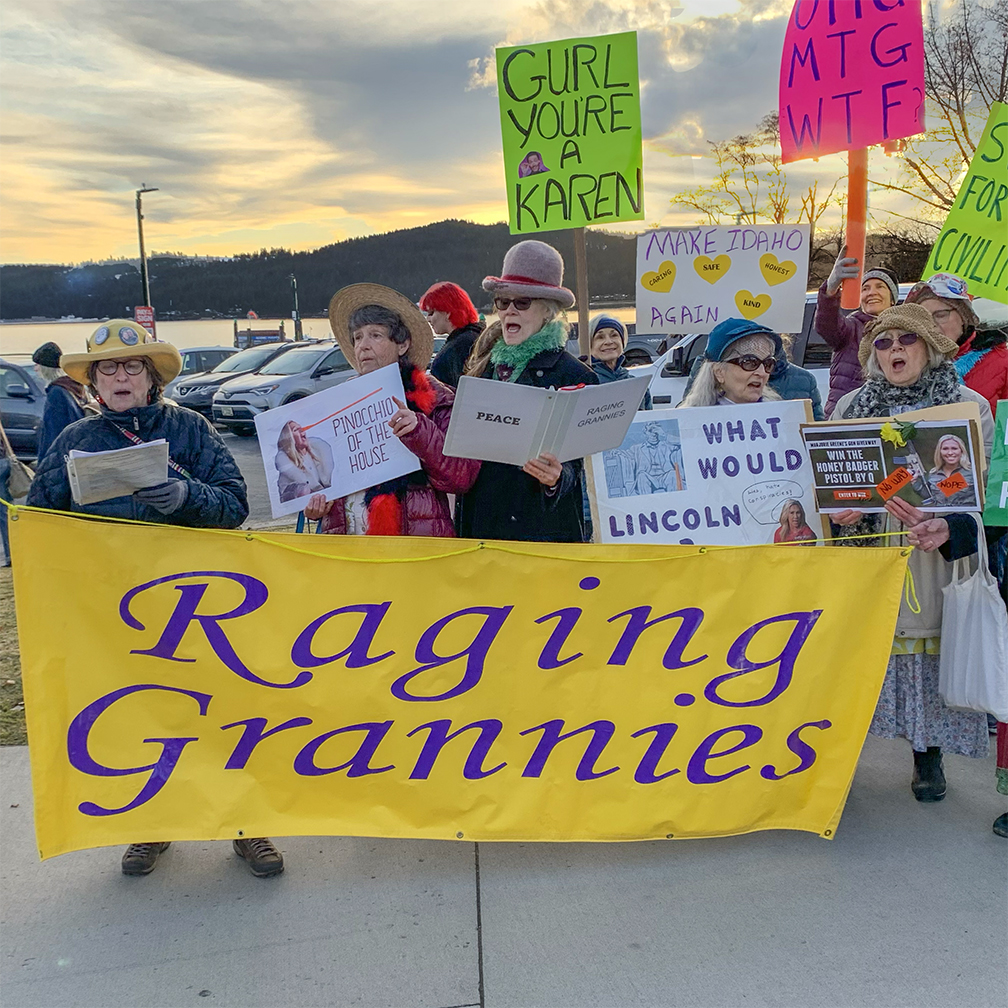
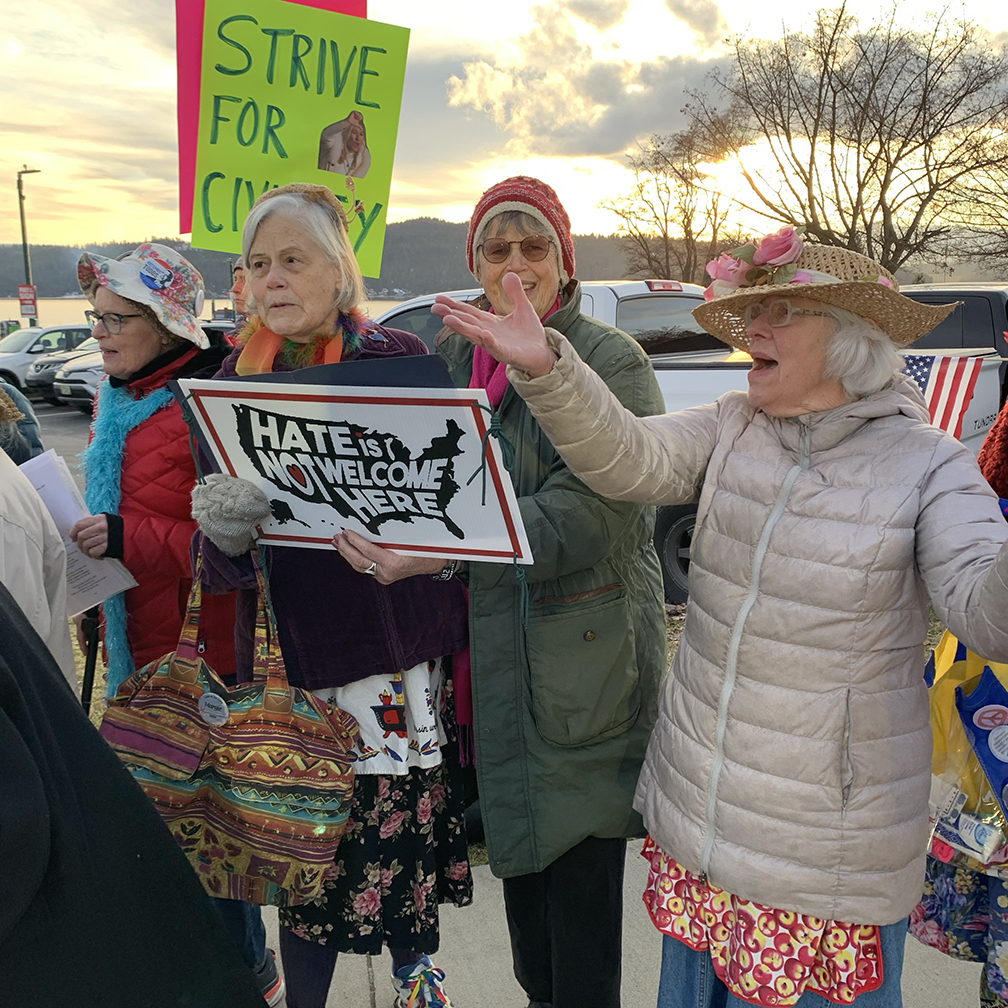
Millions of people marching in the streets across the United States and 10,000 – 20,000 marching here in Spokane. The marchers are asking a fundamental question: How do we preserve democracy when so many of our neighbors seem willing to trade it for the promise of security?
It appears that there is a great deal of fear dividing our country in two. Why these fears, what needs to be done, and how can we do it? What do our readers think? What does our community think? What do others think?
This is a three part series. The first part describes the fears and what needs to be done to address them. The second part addresses why Black people should resist the loss of democracy, the third part deals with what needs to be done. Later articles can follow the progress of the Spokane fight for democracy.
The articles discuss various evidence-based approaches to enhance democratic resilience and social cohesion at government, institutional, and individual levels. They highlight the importance of economic interventions, leadership strategies, educational reforms, media responsibility, and personal engagement. The text outlines measures for specific demographic concerns while emphasizing the need for systemic changes and the importance of measuring success. Key factors for success include authenticity, inclusivity, patience, consistency, local focus, and bipartisan support.
Feedback from social media posts and interactions can be used to invite them to remove the fear, save democracy and participate in building a better community they want to live in.
Read the first article in the Fighting Fear series:
SUBSCRIBE: If you want suggestions on what we must do in addition to protesting in the streets, subscribe to 4comculture.com. Go to the top of the sidebar and send us your email address.
October 18th millions marched. They said NO TRUMP! In order to stop tyranny now what do you want to do?
When the choice is tyranny or revolution, to keep your head in the sand is to choose tyranny. If you choose revolution the question is nonviolent or violent.
The Scenario
A presidential candidate has won the election and gained control over all branches of government.
The new administration refuses to follow court rulings and historical norms.
Democratic processes and checks and balances have broken down.
The leadership style is modeled after authoritarian regimes like Russia, North Korea, and China.
This situation represents a significant threat to democratic institutions and the rule of law, which are fundamental to a functioning democracy.
Can We Trust This Man?
Options for Grassroots Movements
In such a scenario, grassroots movements and civil society organizations face a critical decision: whether to accept the new regime or to resist. Based on historical examples and research on civil resistance, there are several potential courses of action:
Nonviolent revolutions have endured longer
Nonviolent Revolution
Historically, nonviolent revolutions have been more successful and led to more stable democratic outcomes than violent uprisings. Research by Erica Chenoweth and Maria J. Stephan has shown that nonviolent campaigns are twice as likely to succeed as violent ones.
Strategies for nonviolent revolution could include:
a) Mass Mobilization: Organizing large-scale protests, strikes, and boycotts to demonstrate widespread opposition to the regime. This was effectively used in the Philippines People Power Revolution (1986) and the U.S. Civil Rights Movement (1950s-1960s).
b) Civil Disobedience: Engaging in coordinated acts of nonviolent resistance, such as sit-ins, blockades, or refusal to pay taxes. The Indian Independence Movement led by Mahatma Gandhi successfully employed these tactics.
c) Alternative Institutions: Creating parallel governance structures or “shadow governments” to challenge the legitimacy of the regime and provide essential services to the population.
d) International Solidarity: Appealing to international organizations and foreign governments for support and sanctions against the regime. This strategy was crucial in the South African Anti-Apartheid Movement.
Civic Engagement and Grassroots Organizing
Even in challenging political environments, there are legal and peaceful methods to resist authoritarianism:
a) Stakeholder Engagement: Identifying and mobilizing key stakeholders who can influence the political process.
b) Effective Communication: Using clear, consistent messaging to articulate grievances and demands.
c) Technology and Social Media: Leveraging digital platforms for organizing, information sharing, and mobilizing support.
d) Educational Interventions: Implementing programs to promote civic engagement and democratic values.
e) Building Trust and Relationships: Establishing networks of trust within communities to strengthen resistance efforts.
Seeking International Support
Grassroots movements can appeal to international democratic support systems and diplomatic channels:
a) International Organizations: Engaging with bodies like the UN, OSCE, and International IDEA to highlight democratic backsliding and seek support.
b) Foreign Diplomatic Pressure: Encouraging democratic nations to exert diplomatic pressure on the regime, similar to Sweden’s “Drive for Democracy” initiative.
c) NGO Partnerships: Collaborating with international NGOs like Freedom House to document and publicize human rights violations and democratic erosion.
Violent Revolution as a Last Resort
While violent revolution might seem like an option, it’s important to note that:
Violent uprisings are statistically less likely to succeed than nonviolent movements.
They often lead to prolonged conflict and instability.
Violent revolutions can delegitimize the movement in the eyes of both domestic and international observers.
They may provide justification for increased repression by the regime.
Conclusion
In the face of democratic breakdown and the rise of authoritarianism, grassroots movements have historically been most successful when employing nonviolent strategies. These strategies, combined with effective civic engagement and international support, offer the best chance for restoring democratic norms and institutions.
The choice between accepting tyranny and forming a revolution is a complex one, with significant consequences. However, the historical record suggests that nonviolent revolutions, when well-organized and widely supported, can be effective in challenging even the most entrenched authoritarian regimes.
It’s crucial for grassroots movements to carefully consider their options, build broad coalitions, and maintain a commitment to nonviolent tactics to maximize their chances of success and minimize the risk of further destabilization or violence.
When tyranny and revolution appear to be the choices, which do you think we ought to choose? The choice should be made with deep thought. If you keep your head in the sand and refuse to recognize the current conditions, you have chosen tyranny. But if you choose revolution the question is nonviolent or violent.
If you want suggestions on what we must do in addition to protesting in the streets, subscribe to 4comculture.com. Go to the top of the sidebar and send us your email address.
With millions of people marching in the streets across the United States and 10,000 – 20,000 marching here in Spokane this would make a good topic for our local newspapers, comma and social media. It would also be an opportunity to disseminate strategic conversations across the nation.
Ann Marie Danimus engages with a man about abortion prior to U>S> Rep. Marjorie Taylor Greene’s speedh at a Kootenai County GOP dinner in downtown Coeur d’Alene. 2022
The marchers are asking a fundamental question: How do we preserve democracy when so many of our neighbors seem willing to trade it for the promise of security?
It appears that there is a great deal of fear dividing our country in two. Why these fears, what needs to be done, and how can we do it? What do our readers think? What does our community think? What do others think?
This is a three part series. The first part describes the fears and what needs to be done to address them. The second part addresses why Black people should resist the loss of democracy, the third part deals with what needs to be done. Later articles can follow the progress of the Spokane fight for democracy.
The articles discuss various evidence-based approaches to enhance democratic resilience and social cohesion at government, institutional, and individual levels. They highlight the importance of economic interventions, leadership strategies, educational reforms, media responsibility, and personal engagement. The text outlines measures for specific demographic concerns while emphasizing the need for systemic changes and the importance of measuring success. Key factors for success include authenticity, inclusivity, patience, consistency, local focus, and bipartisan support.
Feedback from social media posts and interactions can be used to invite them to remove the fear, save democracy and participate in building a better community they want to live in.
The years between 18 and 25 are critically important for an individual’s future life experience, particularly in the context of political activism. This period, often referred to as “emerging adulthood,” is a pivotal time for brain development, personality formation, and the establishment of long-lasting civic engagement patterns. Let’s explore the significance of these years for political activists in detail:
Neurobiological Development and Decision-Making
During the ages of 18-25, the brain undergoes significant changes that are crucial for political activism:
Prefrontal Cortex Maturation: The prefrontal cortex, responsible for higher-order cognitive processes such as planning, impulse control, and decision-making, continues to develop well into the mid-20s [1]. This ongoing maturation is essential for political activists as it enhances their ability to make informed decisions, plan campaigns, and strategize effectively.
Emotional Regulation: The limbic system, involved in emotional processing and risk-taking behaviors, also matures during this period [2]. This development is crucial for political activists who often face emotionally charged situations and need to regulate their responses effectively.
Synaptic Pruning and Myelination: These processes improve cognitive abilities and decision-making skills [1], which are vital for activists navigating complex political landscapes and making critical choices about their involvement and strategies.
Identity Formation and Value Systems
The years 18-25 are fundamental for shaping an individual’s identity and values, which are core to political activism:
Identity Exploration: According to Erikson’s stages of psychosocial development, this period involves exploring various possibilities in love, work, and worldviews to develop a coherent sense of self [3]. For political activists, this exploration is crucial in forming their political identities and determining the causes they will champion.
Self-Focused Exploration: Emerging adults often focus on developing the knowledge, skills, and self-understanding necessary for adult life [4]. This self-focus allows future activists to identify their passions and develop the competencies needed for effective advocacy.
Value System Development: The experiences and exposures during this period significantly influence the formation of an individual’s value system, which is fundamental to their political beliefs and motivations for activism.
Civic Engagement and Political Participation
The 18-25 age range is critical for establishing patterns of civic engagement that often persist throughout life:
Early Political Socialization: This period is crucial for political socialization, with family, friends, and institutions playing significant roles in motivating initial political participation [5]. These early influences can shape an activist’s long-term engagement and approach to political issues.
Skill Development: Early involvement in activism during this period leads to the development of political literacy and social capital, which are crucial for ongoing civic participation [6]. These skills, acquired in the formative years of activism, often become the foundation for a lifetime of effective political engagement.
Long-term Impact: Studies show that civic participation in adolescence and young adulthood helps develop a civic identity associated with higher levels of engagement later in life [7]. This suggests that activists who start their journey during these years are more likely to maintain their commitment and involvement over time.
Social Impact and Movement Building
The unique characteristics of youth activism during this period can have significant societal impacts:
Challenging Norms: Young activists between 18-25 are particularly effective at deconstructing prevailing societal standards and questioning deeply rooted systems of authority [8]. This ability to challenge the status quo is crucial for driving social change.
Innovative Approaches: With their adaptability and familiarity with new technologies, young activists in this age group often pioneer innovative methods of mobilization and communication [9]. This innovation can significantly enhance the reach and effectiveness of political movements.
Global Connectivity: The issues championed by today’s young activists, such as climate justice, racial fairness, and gender equality, often transcend geographical and ideological boundaries [10]. This global perspective, developed during these formative years, can lead to more inclusive and far-reaching activism.
Conclusion
The years between 18 and 25 are undeniably crucial for shaping an individual’s future as a political activist. This period encompasses significant neurobiological development, identity formation, and the establishment of civic engagement patterns that often persist throughout life. The experiences, skills, and networks developed during this time can set the foundation for a lifetime of impactful political activism.
For political activists, these years represent a unique opportunity to shape their worldviews, develop critical skills, and establish the groundwork for long-term civic engagement. The activism initiated during this period often has far-reaching consequences, not just for the individuals involved but for society as a whole. As such, supporting and nurturing political engagement during these formative years can have profound implications for the future of social movements and political change.