A veteran civil rights attorney outlines key legal and practical guidance for protesters. He emphasizes understanding definitions—civil disobedience, “actions,” illegal conduct—and organizing ahead of time rather than relying on spontaneous events. Rights aren’t enforceable on the street; they take effect in court. Drawing on Martin Luther King Jr.’s advice, he urges nonviolent protesters not to defy orders, not to evade arrest, and to accept penalties. He covers interactions with police—knowing when you’re free to go, invoking counsel, and staying calm—and shares jail survival tips: remove jewelry, manage medications, track your property, and communicate respectfully. The talk concludes that preparation, clear objectives, and disciplined nonviolence are essential for safe, effective protest.
The psychological traits of true believers in mass movements can be observed in the followers of contemporary political figures like Donald Trump, Kamala Harris, Barack Obama, and Bernie Sanders.
Social media platforms are central tools in organizing, amplifying, and documenting protest movements, including both legal demonstrations and acts of civil disobedience. Their influence extends to nearly every phase of modern activism.
Key Functions of Social Media in Protests
Organization and Mobilization
Rapid Communication: Platforms like X (formerly Twitter), Facebook, WhatsApp, and Telegram enable instant alerts and updates to large audiences.
Event Coordination: Details about protest times, locations, and changes can be distributed quickly.
Recruitment: Movements reach new supporters, often beyond traditional activist circles.
Information Sharing
Education: Infographics, videos, and threads explain protest goals, legal rights, and safety tips.
Real-Time Updates: Live streams and posts provide on-the-ground news, especially when mainstream media coverage is lacking.
Resource Distribution: Legal aid contacts, medical help, or transportation details are easily shared.
Public Awareness and Narrative Control
Framing the Message: Movements can frame their demands and actions, independently of government or traditional media narratives.
Viral Content: Hashtags and viral posts can bring national or global attention to local issues quickly.
Documentation and Evidence
Recording Events: Videos and photos document both peaceful protest and any incidents of violence or repression.
Accountability: Livestreams and real-time sharing can deter misconduct by authorities and provide evidence for legal defense.
Solidarity and Morale
Community Building: Supporters express solidarity, encourage one another, and build a sense of collective purpose.
International Support: Protests in one country can inspire or support similar movements elsewhere. Risks and Challenges
Surveillance and Infiltration
Monitoring: Law enforcement may monitor public posts or infiltrate private groups.
Data Collection: Social media data can be used in prosecutions or to target activists.
Disinformation and Smear Campaigns
False Narratives: Opponents may spread misinformation or attempt to discredit the movement.
Trolling and Harassment: Activists may face online abuse or threats.
Privacy Concerns
Doxxing: Personal information may be exposed.
Platform Policies: Posts or accounts can be removed, limiting reach or erasing documentation. Best Practices for Protesters on Social Media
Use Encrypted Messaging Apps: For sensitive coordination, prefer Signal, Telegram (private chats), or similar platforms.
Limit Location Sharing: Disable geotags and avoid posting live locations unless necessary.
Use Pseudonyms: Protect personal identity where possible.
Fact-Check Information: Prevent spread of rumors or unverified claims.
Backup Important Content: Download key videos/photos in case accounts are suspended or content is removed. Conclusion
Social media is a double-edged sword: It empowers protest movements with unprecedented coordination and amplification, but also exposes activists to risks. Effective protest training now always includes a section on digital security, smart communication, and narrative control through social media.
-Legal consultation: Connect with civil rights attorneys familiar with local protest laws -Venue selection: Choose accessible locations with proper facilities -Materials: Prepare handouts on legal rights, emergency contacts, and safety protocols
Workshop Agenda Structure
Session 1: Legal Rights and Responsibilities (60 minutes)
Know your constitutional rights (1st Amendment protections)
Understanding permit requirements and legal protest zones
Historical context and effectiveness of peaceful protest
De-escalation techniques
Maintaining discipline under pressure
Building coalition and inclusive messaging
Session 3: Safety and Security (45 minutes)
Personal safety protocols
Communication systems and emergency contacts
Identifying potential risks and exit strategies
Medical considerations and first aid basics
Digital security and privacy protection
Session 4: Effective Organization and Messaging (60 minutes)
Clear goal setting and achievable objectives
Media engagement and public communication
Social media strategy and documentation
Building sustainable movements
Coordination with other groups
Session 5: Practical Scenarios and Role-Playing (45 minutes)
Simulated interactions with counter-protesters
Practice with media interviews
Response to various law enforcement scenarios
Group decision-making under pressure
Key Training Components
Facilitator Requirements:
Experienced organizers or civil rights advocates
Legal experts familiar with protest law
Conflict resolution specialists
Community leaders with grassroots experience
Follow-up Support:
Ongoing legal hotline access
Regular check-ins with participants
Resource sharing networks
Mental health and trauma support
The most effective protest training emphasizes peaceful, legal, and strategic action while ensuring participants understand both their rights and responsibilities as citizens engaging in democratic processes.
The Psychological Makeup of the “True Believer” in Eric Hoffer’s Book
Eric Hoffer’s “The True Believer: Thoughts on the Nature of Mass Movements” (1951) is a seminal work that examines the psychology of individuals who become deeply committed to mass movements, whether political, religious, or social. Hoffer’s analysis focuses on the motivations and characteristics of these “true believers” and the conditions that make mass movements thrive.
Key Psychological Traits of the True Believer
1. Discontent with the Present Self: True believers often feel a deep dissatisfaction with their personal lives. They see themselves as ineffectual, powerless, or insignificant and seek to escape this reality by merging their identity with a larger cause or movement [1]. Hoffer argues that this dissatisfaction drives people to seek meaning and purpose in something external, often leading them to embrace ideologies that promise radical change.
2. Desire for Certainty and Simplicity: True believers are drawn to movements that offer clear, black-and-white answers to complex problems. They crave certainty and are often intolerant of ambiguity or nuance.
3. Willingness to Sacrifice Individuality: Hoffer notes that true believers are willing to subordinate their individuality to the collective identity of the movement. This allows them to feel part of something greater than themselves, which can be empowering but also leads to fanaticism.
4. Frustration and Resentment:!Many true believers harbor feelings of frustration and resentment, often directed at society, elites, or other groups they perceive as responsible for their struggles. This resentment fuels their commitment to the movement and their willingness to fight for its goals.
5. Faith in a Glorious Future: True believers are often motivated by a vision of a utopian future promised by the movement. This vision gives them hope and a sense of purpose, even if it requires sacrificing the present [2].
6. Susceptibility to Leadership: Hoffer emphasizes that true believers are often drawn to charismatic leaders who embody the ideals of the movement and provide a sense of direction and unity.
Comparison to Modern “True Believers”
The psychological traits Hoffer identified remain relevant today and can be observed in the followers of contemporary political figures like Donald Trump, Kamala Harris, Barack Obama, and Bernie Sanders. While the specific ideologies and movements differ, the underlying motivations and behaviors of their most ardent supporters often align with Hoffer’s analysis.
Donald Trump: Many of Trump’s most devoted supporters exhibit traits of true believers, such as a strong desire for certainty, resentment toward perceived elites, and faith in Trump’s promises to “Make America Great Again.” His charismatic leadership and ability to channel frustration into a cohesive movement resonate with Hoffer’s description of mass movement dynamics.
Kamala Harris and Barack Obama: Supporters of Harris and Obama often emphasize their hope for a more inclusive and equitable future. While their movements may not exhibit the same level of fanaticism as others, the faith in their leadership and vision for change reflects some of the psychological traits Hoffer described, particularly the desire for a better future and identification with a collective cause [2].
Bernie Sanders: Sanders’ supporters often align with Hoffer’s analysis of frustration and resentment, particularly toward economic inequality and corporate power. His movement’s focus on systemic change and a vision of a more just society appeals to those seeking meaning and purpose through collective action.
Key Differences in Modern Contexts
While the psychological makeup of true believers remains consistent, modern mass movements are shaped by new factors:
Social Media: Platforms like Twitter and Facebook amplify the reach of mass movements, allowing true believers to connect and organize more easily. This can intensify the sense of belonging and reinforce ideological echo chambers.
Polarization: Modern politics is highly polarized, which can deepen the divide between opposing groups of true believers and increase the intensity of their commitment.
Polarization: Modern politics is highly polarized, which can deepen the divide between opposing groups of true believers and increase the intensity of their commitment.
Diverse Ideologies: Unlike the mid-20th century, today’s mass movements span a broader range of ideologies, from progressive to conservative, reflecting the complexity of modern societies.
Conclusion
Eric Hoffer’s insights into the psychology of the true believer remain strikingly relevant in understanding the dynamics of modern mass movements. Whether supporting Donald Trump, Kamala Harris, Barack Obama, or Bernie Sanders, true believers today share many of the same psychological traits Hoffer identified: dissatisfaction with the present, faith in a better future, and a willingness to subordinate individuality to a collective cause. However, the tools and contexts of modern movements—such as social media and political polarization—have added new dimensions to the phenomenon.
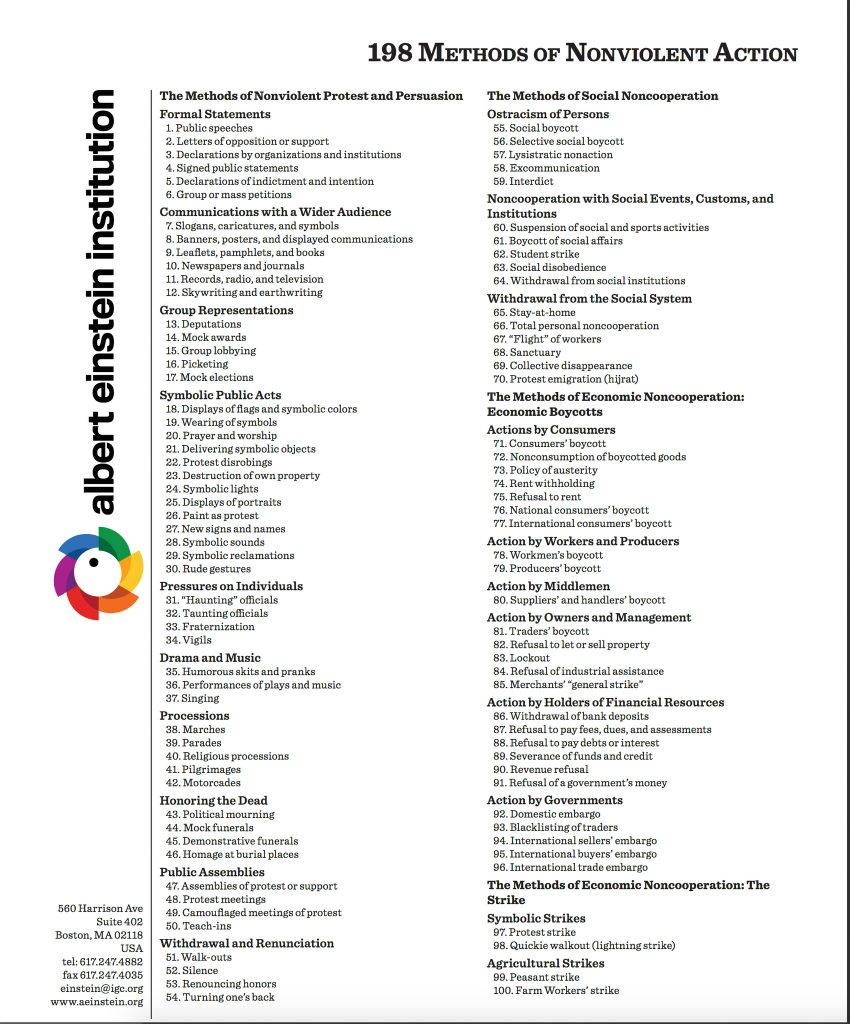
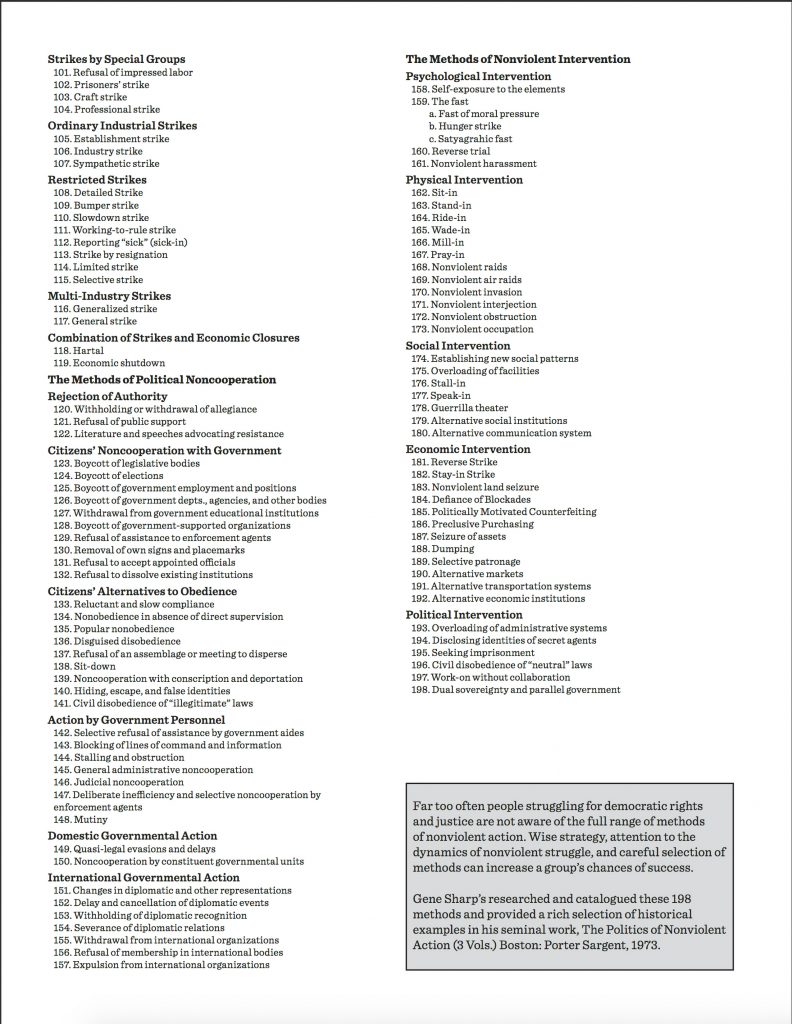
Practitioners of nonviolent struggle have an entire arsenal of “nonviolent weapons” at their disposal. Listed below are 198 of them, classified into three broad categories: nonviolent protest and persuasion, noncooperation (social, economic, and political), and nonviolent intervention. A description and historical examples of each can be found in volume two of The Politics of Nonviolent Action, by Gene Sharp
Recent data shows potential for successful resistance
High public demand for government reform (49% Democrats, 83% Republicans) [[13]]
Strong electoral responses against anti-democratic actions
Growing concern about institutional integrity across political spectrums [[14]]
The success of these strategies depends on coordinated action across multiple sectors and sustained commitment to democratic principles. The research suggests that combining legal mechanisms, civil society action, and international support provides the most effective approach to protecting and restoring democratic institutions.