Why We Marched: 1965

Were You There?

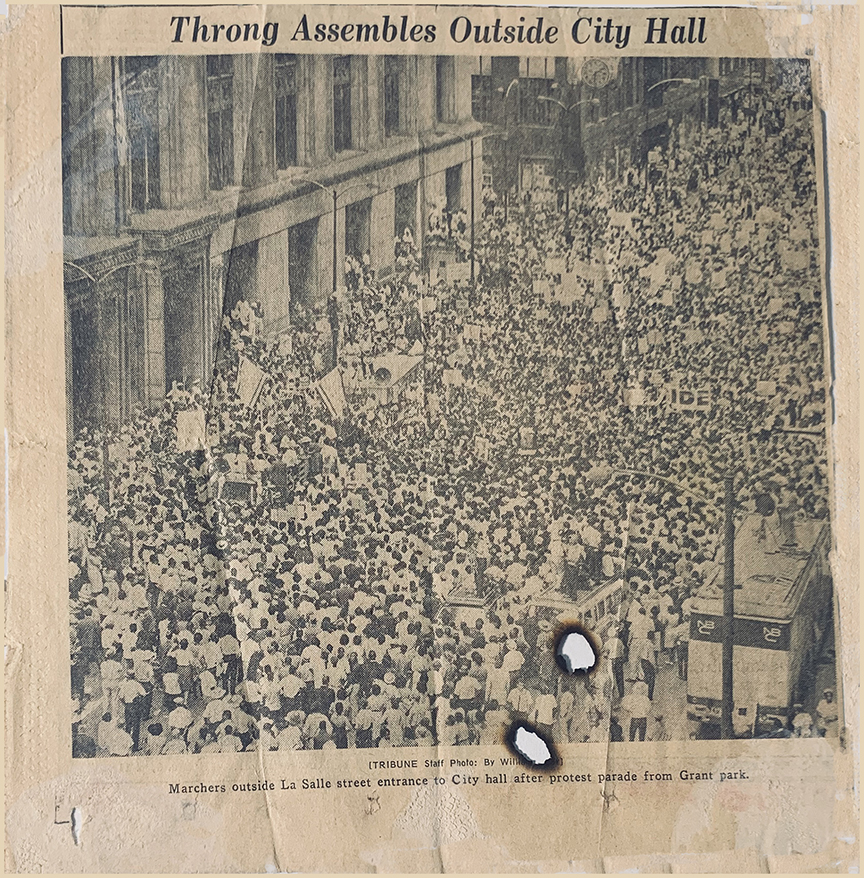
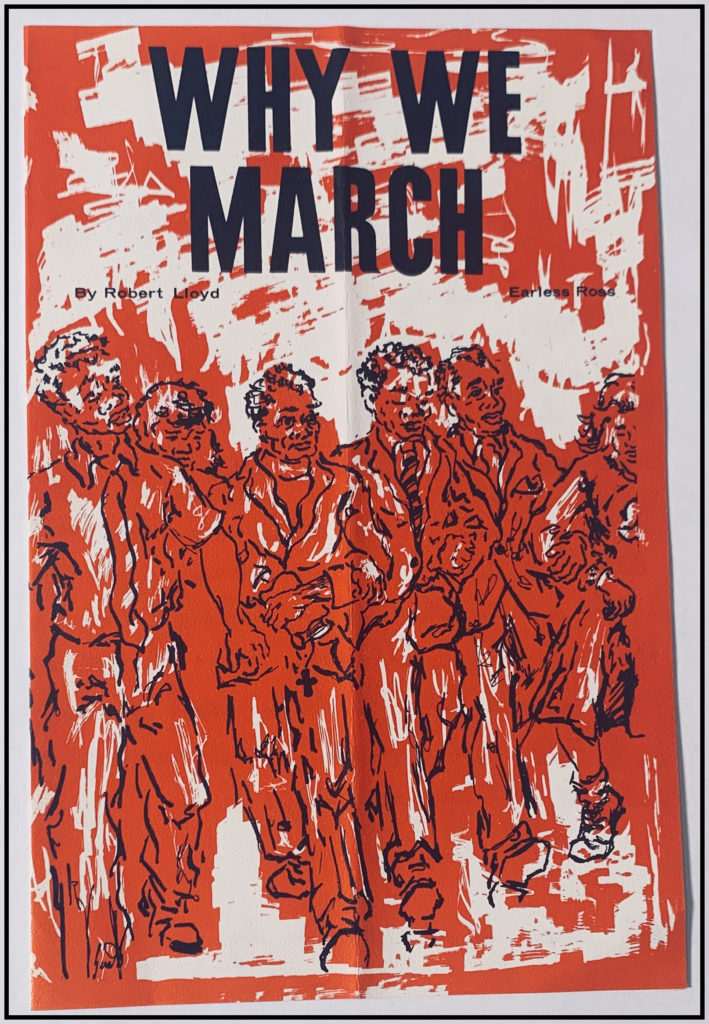
In the summer of 1965 the people listed below and I shared a common experience. Hundreds of us shared this experience. The experience changed my life. Student and parent protests against the Chicago School Board were focused by CORE in 1962, reaching a peak in the summer of 1965 with the Daily Daley Marches from Buckingham Fountain to Mayor Richard J. Daley’s house to protest school segregation and conditions.

As my friend Earless Ross and I marched we asked individuals in the line why they marched. We gathered numerous testimonies from those marching with us. I would like to know how that experience affected their lives.

If you are one of those listed below, know any of them or other people who participated in the Daily Daley Marches, please contact me:

Robert “Bob” J. Lloyd
text: (509) 999-1263
rdlloyd@comcast.com subject: Why We March
3314 S Grand Blvd. Spokane WA 99203

Authors of the Statements

James G. “Allen Jr.”, Marla Bollin, Dave Canon, Kathy Casey, Mrs. Ronald Crawford, Jesse Daniales, Ken Davis, Arnelle Douglas, Clevon Edgerson, Charles E. Gant, Mrs. C. R. Gillies, Lucille Gipson, Walter D. Glanze, LeRoy Griffin, Elihu Harris, Jerry Herman, Carol Hill, William Hollins, Margaret Hollowell, Walter Ireland (Freloud?), Jesse Jackson, Nathaniel Jackson, Thomas Richard Joiner, Russell D. Jones, Oliver Julius, Sue Kaply, William Kennedy, Helen Kitterer, Joh Kles, Len Lazar, Marchain Lightfoot, Mrs. Limbo, Robert Lucas, Garrick Madison, John Maloney, LaMar McCoy, Earl D. Mosley, Bill Murphy, Jack Ongemach, W. Robinson, Earless Ross, Mary S (Sroges?), Chuck Sanders, Janice (?) Saylor, Mary Settles, Laurie Shortreed, Charles Smith, Fred Smith, Ollie M.Smith, Robert Shively, Dan Solomon, Dick Sroges, Jesse Stanton, Tanya Stewart, Peggy Terry, Cheryl Thompson, Barbara Wakefield, Margaret Walker, Patricia Washington, Harvey Weiner, Mrs. Williams, Ronald G. Williams, Susan Williams, James Wright, Cara Young
Coordinating Council of Community Organizations Statement Written by Marchain Lightfoot

Others involved whom I would like to contact: Ted Manheart, Pat Packard, Rita Walford, Dennis Shriver, Gerald Thomas.

Cover Art by Gerald Thomas 1965

Help Name a New School After Frances Scott

Spokane Public School District 81 is looking for nominations for names of new schools and buildings. We nominated Frances Scott for the new middle school in NE Spokane on Foothills Drive. We also nominated Ruben Trejo (see the link) for the new building for the On Track Academy located on the Shaw Campus.

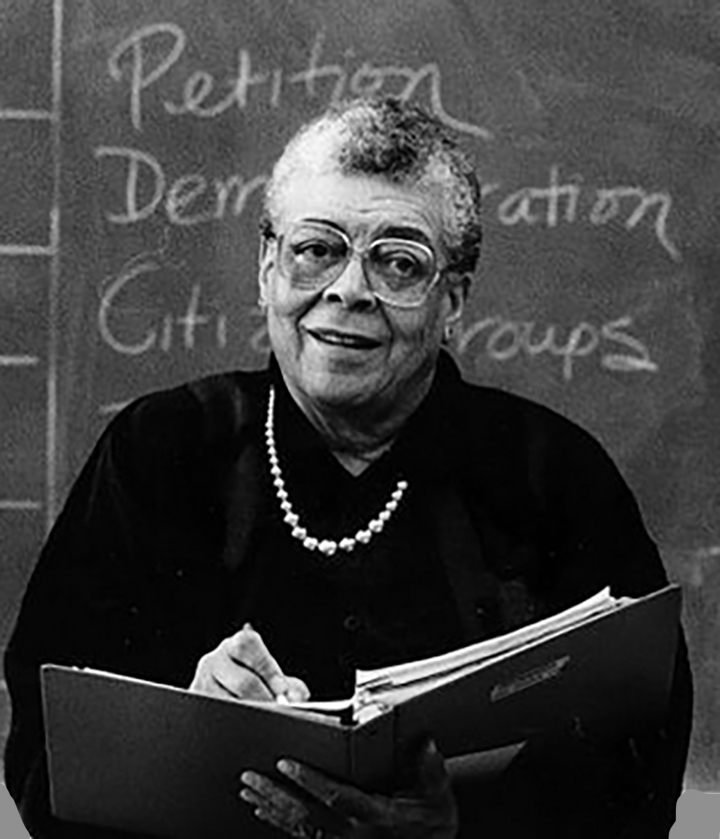
Frances Scott 1921 – 2010

Scott was one of Spokane’s remarkable people – the city’s first African-American woman attorney, a teacher at Rogers High School for more than 30 years, a president of the Spokane Education Association and a president of the Washington State University Board of Regents.

She was also a forceful and stalwart leader in the local civil rights movement, which helped drag a recalcitrant Spokane toward equality. She believed in nonviolence, but don’t confuse that with meekness.

Listen to Scott in a 1982 talk: “We must exercise some degree of militancy … against slumlords, against Klansmen, against people who want no minorities in their neighborhoods, against racist textbooks and against politicians who thrive on bigotry. Otherwise, people will say in the future, ‘You were there. What did you do about it?’ ”

She grew up during the 1920s and 1930s, especially tough times for a black person aspiring to be a professional in Spokane.

When Scott was a student at Marycliff High School in the late 1930s, she and some of her high school friends went to the Davenport Hotel to interview the famous opera star Marian Anderson for the school paper.

The Davenport made Scott ride in the freight elevator.

“My white friends – bless their hearts – decided if I had to ride the freight elevator, they would, too,” she later said.

They couldn’t find Anderson’s room – for good reason. Anderson was black and the Davenport was lily-white in those days. The girls eventually found Anderson in a small hotel nearby.

Scott spoke often of the time when, as a girl, she had to have her appendix removed at a Spokane hospital. The hospital gave her a private room – but only so a white patient wouldn’t have to share.

“I suppose that was one of the advantages of being black,” she said, dryly. “But it was humiliating when you realize why I got the room to myself.”

She graduated from Marycliff and went on to Holy Names College. She married W. Vernon Scott, a Spokane chiropractor, while still in college – and that didn’t go over well with the nuns at Holy Names.

“The good nuns put her out because she married a divorced man in her senior year,” said her sister, Ruth Nichols, of Spokane.

Undeterred, Scott finished her degree at Whitworth College (now University) and then went on to get a master’s degree in education. This was 1958 – a time when the Spokane School District had only four black teachers, up from zero in 1950.

She was hired at Rogers because “my credentials were good enough for them to hire me without doing me a favor.” She would teach English and German there for more than three decades.

She was 54 when she decided to take on another academic challenge.

“She wanted her son to go to law school,” Nichols said. “And we all said, if you want a lawyer in the family, you should go yourself.”

So she did. She graduated from the Gonzaga University School of Law in 1979 – and became Spokane’s first African-American woman attorney. When she was sworn in to the bar, she said, “I want to be able to instruct, as well as represent, minority people in their dealings with the law.”

She went on to practice law on the side, taking mostly civil rights and pro bono cases, while still keeping her Rogers teaching job.

Scott soon found her law degree handy in an entirely new arena. In 1981 she was elected president of the teachers union, the Spokane Education Association. Her election was notable for at least one reason: She had been one of the few teachers to cross picket lines in a 1979 strike. She was able to convince her fellow teachers that she had been bound, as an attorney, to obey a court injunction that had ordered teachers back to work. She remained president of the union until 1983.

She was also deeply involved in the Spokane branch of the NAACP, in the Democratic Party and at Holy Trinity Episcopal Church.

Excerpted from Distinguished Woman Left Us a Legacy by Jim Kershner.

The Spokesman Review Sat. Oct. 23 2010

Innocence Project In Spokane

Ricky Kidd spoke on his resilient 23 year fight for his freedom at the Gonzaga University School of Law February 24, 2020

In 1996, Ricky Kidd was wrongfully convicted of the double-homicide of George Bryant and Oscar Bridges in Kansas City, Missouri. Witnesses to the crime testified that three men entered Bryant’s home in the middle of the day. The two victims were found dead, Bridges in the basement and Bryant in the street outside his home. Bryant’s 4-year-old daughter was discovered alive in a closet inside the house.

Ricky became the lead suspect in the case after an anonymous tip came in naming him as one of the killers; evidence suggests this phone tip may have been called in by one of the actual perpetrators. Ricky had what should have been an airtight alibi for the crime: he was at the Jackson County Sheriff’s Lake Jacomo Office at the time of the murders, filling out an application for a gun permit.

Le’Taxione Has Come Home After Serving 23 Years

Le’Taxione has come home after serving 23 years of a life sentence without parole in Washington State, despite the fact that the courts held he was not a “Three Striker” and that his sentence was unlawful. Nevertheless the Washington Supreme Court held that they were powerless to correct this error and Le’Taxione™ sought and received a commutation of his sentence from Governor Jay Inslee. Le’Taxione is living now in Spokane. His mission is to create avenues to be used by youth in their journey to success – while simultaneously providing life altering opportunities to help assist them in addressing adverse childhood experiences, violence, criminality, homelessness, expulsions, the school to prison pipeline, addiction, mental health challenges etc. He is promoting mentorship, peer support groups, self-determination and empowerment. We will learn how at his:

IMPACTED YOUTH FORUM

Join Le’Taxione at the Impacted Youth Forum February 29, 2020 from 10:00-1:30 at Spokane Falls Community College in the Student Union Building SUB lounge. Youth are encouraged to speak at this event.

150,000 Wrongfully Accused Are STILL in Jails Today.

Here’s What You Can Do to Help.

The Breakdown with Shaun King The North Star

.

Join Shaun as he unpacks the most important stories of injustice, racism and corruption, but also tells you who’s fighting back and how you can support and join them with practical action steps.

This story that needs our help now:
It’s up to us to free Myon Burrell! 17 years ago, Myon was charged and convicted of a murder that he did not commit. He is completely innocent, and has been in prison since 2002.

Ep. 179 – Do you know about Myon Burrell?

We can’t just stand by. Shaun lays the framework for how we will free him. Listen for two action steps that should leave us looking within.

Ep. 180 – FreeMyonBurrell.com


You need to care about the wrongly accused. We need to pressure County Attorney Michael Freeman, his colleagues and other elected officials to vacate Myon’s conviction and create a Conviction Integrity Unit to overturn more wrongful convictions. Myon has spent more than 17 years fighting for his freedom, and he is still fighting.

Make Calls

Sign a Petition

Visit FreeMyonBurrell.com right now for more details.

2020 Martin Luther King Days

3000 show up at Spokane Convention Center LINK TO MORE PHOTOS
2020 HOLY TEMPLE Commemorative Celebration LINK TO MORE PHOTOS

This year we gathered as usual Sunday January 19 at Holy Temple Church of God in Christ for the Commemorative Celebration. Monday January 20 we gathered at the Spokane Convention Center for a video presentation about the MLK East Central Community Center, inspirational speeches, Max Daniels of House of Soul gave his rendition of A Change Is Gonna Come with a slide presentation that illustrated previous MLK rallies and CLICK: Those Who Showed Up during the year to speak to power, marched around several blocks downtown, and returned to the Exhibit Hall where Michael Moon Bear youth drummers entertained.

But there were only two action steps suggested.

One was that we spread the love and brotherhood of Dr. King’s teachings and the other was that we show up February 3 at City Hall to ask the City Council to rename the East Central Community Center as the Martin Luther King Community Center.

People leave these rallies without knowing what they can do. What will you do between now and when we gather again in January 2021 for the MLK rally and march? In the next few weeks there are the impeachment proceedings followed by the campaigns for the presidential and other elections in November. We need to get busy.

100 Discussion to Action Groups

If you believe in CLICK: These Principles we need you to go to your local coffee house and form a discussion group with five to ten individuals to discuss issues, plan strategies and take actions. Begin building the community you want to live in. We want to build 100 of these discussion groups. If we have 100 discussion groups we will be able to turn out 500 to a 1000 people to demonstrate, to knock on doors, to participate in social justice activities. Regardless of whomever is elected we will have built the movement we need to support the human rights and social justice changes that Sam Cooke wrote about in one of the greatest songs of all time A Change is Gonna Come.

If you want to join us TEXT (509) 934-3933 with your name, email address and zip code. We will let you know about discussion groups in your area.

Here are some things that you can do immediately:

Read 198 Methods of Nonviolent Action. Click: https://4comculture.com/archives/14129

Read about the 12 things needed for a movement. Click: Where Do You Want to Start?

Listen to Shaun King’s podcast and take his action steps. Click: The Breakdown

Coffee and Discussion Groups

Spokane People of Color Legislative Conference

People of Color Legislative Conference
Areas of Focus Discussion for Spokane Region

Saturday, October 12th, 2019

The summit has three main goals: 1) to stimulate dialogue between diverse POC organizations, community leaders, and state legislators of color to build statewide solidarity, unity and mobilizing capacity on the most important issues to our collective communities of color; 2) to organize a platform for community leaders of color to develop a Legislative Agenda of top priorities for the Senate and House Members of Color Caucus (MOCC) to push forward; and 3) to come out with a working list of who’s working on what issue in what region, so that organizations across the state can build on momentum made at the summit. This is not meant to pre-empt any individual community’s legislative priorities, only build a resource for connecting people and organizations with shared issues.

Racial Justice Community Leaders

“Racial Justice Community Leaders” were invited to the summit and asked to bring their organization’s legislative priorities and were “welcome to invite POC community leaders you know to register for the event.”

Community Leaders of Color

The purpose of the summit was to hear from and connect people of color community leaders and legislators of color to build solidarity and mobilizing capacity across the state for issues that are of highest priority to our collective communities of color.

Below are Spokane’s top 10 priorities for each of the categories discussed.

Racial and Criminal Justice

  • End cash bail
  • Decriminalize driving with 3rd degree suspend license
  • Decriminalize poverty
  • I-1000 (pro) affirmative action (ref. 88 on ballot)
  • Expedition of voting rights restoration of people with felonies
  • HB 1517: Risk assessment, etc. for DV and IPV (need racial equity lens plus broader rep from impacted population)
  • Rights and education for women who enter prison while pregnant
  • True blood legislation

Housing, Homelessness, Displacement, & Human Services

  • Statewide rent control
  • Just cause eviction statewide
  • Fair chance housing
  • Enhance reentry housing
  • More $ for permanent affordable housing
  • Rental inspection
  • Landlord registry
  • Civil-legal aid/right to council for eviction court
  • Build in rent grace period or remove 3 notice protection revocation
  • Decriminalizing public camping
  • Data privacy

Education

  • Loan forgiveness
  • Universal voluntary access to ECAP
  • Full day kindergarten, Headstart
  • Raise ECAP poverty threshold so more people qualify
  • Cultural competence for Pre-K teachers
  • Increase support for teachers plus families for accessing development resources
  • Fund to provide disciplinary diversion to keep kids in classroom
  • More teachers/authority figures of color
  • Race pay equity-equal pay

Other

  • Racial health equity (tied for first priority)
  • Consideration of voting rights/participation in underrepresented communities (tied for first priority)
  • Ask for expulsion of Matt Shea (tied for second priority)
  • More $ resources towards impact of nuclear industry on communities of color (tied for second priority)

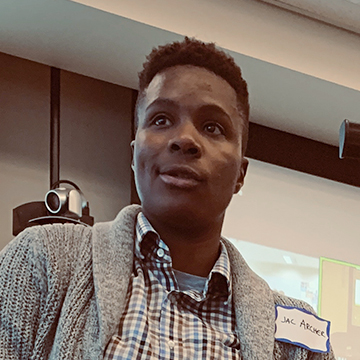
If you want to know what organizations and individuals registered for the event and represented people of color in our Spokane community, contact Terri Anderson and Jac Archer, the facilitators of the Spokane summit.

If you would like to see the entire list of issues suggested for consideration click here.

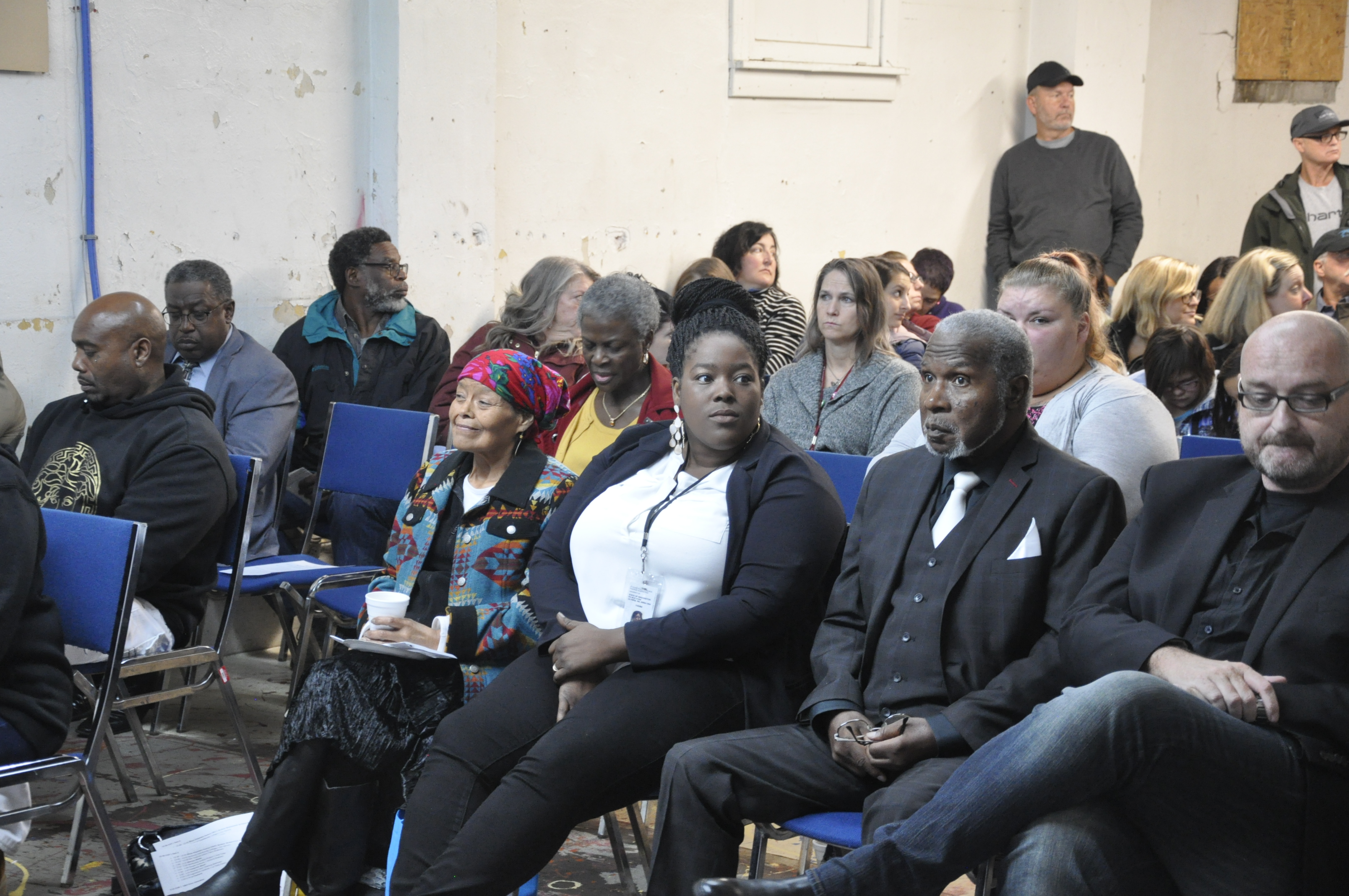
Black Prisoner’s Caucus Family & Community Summit

Duaa-Rahemaal Williams

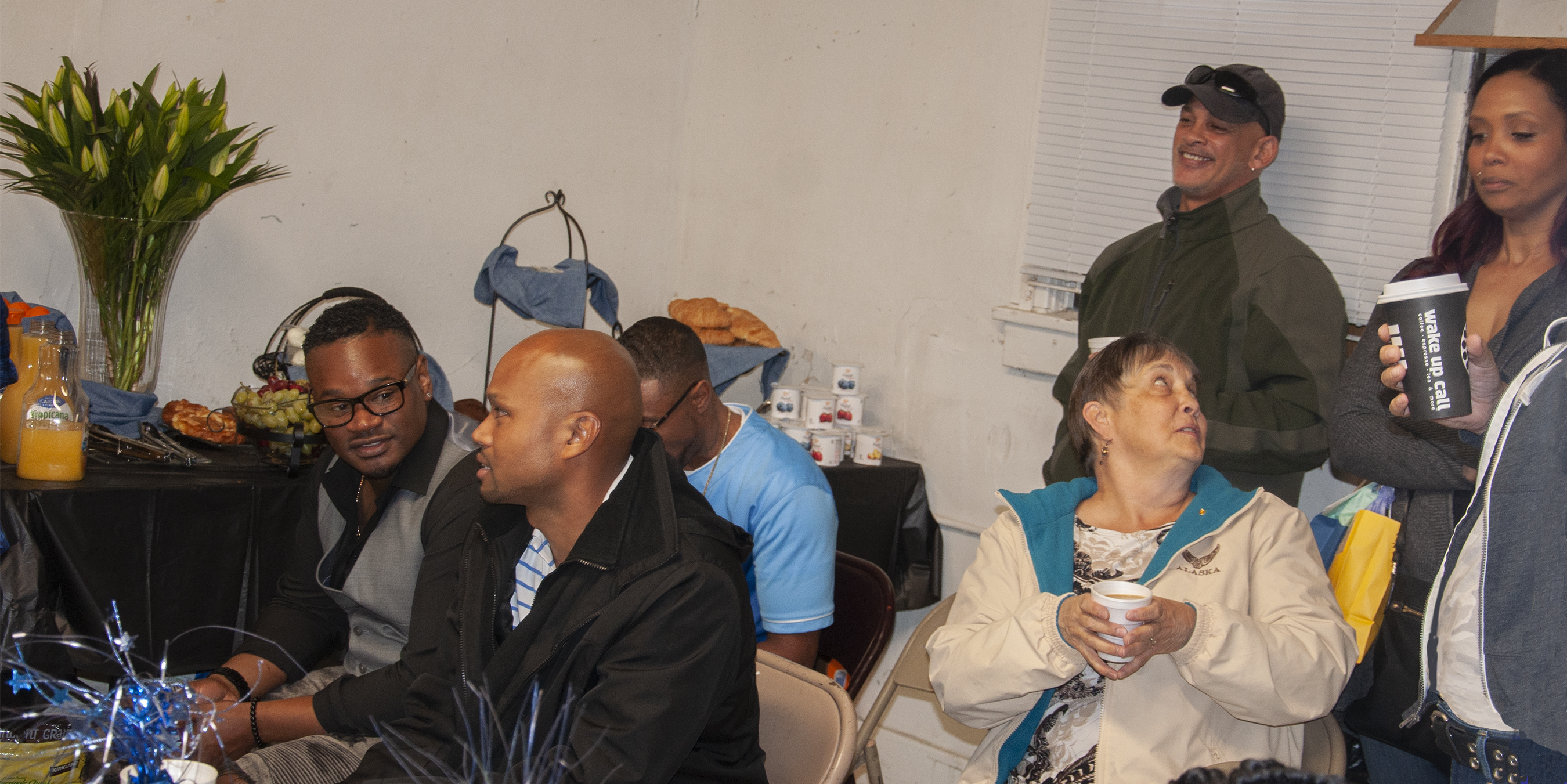
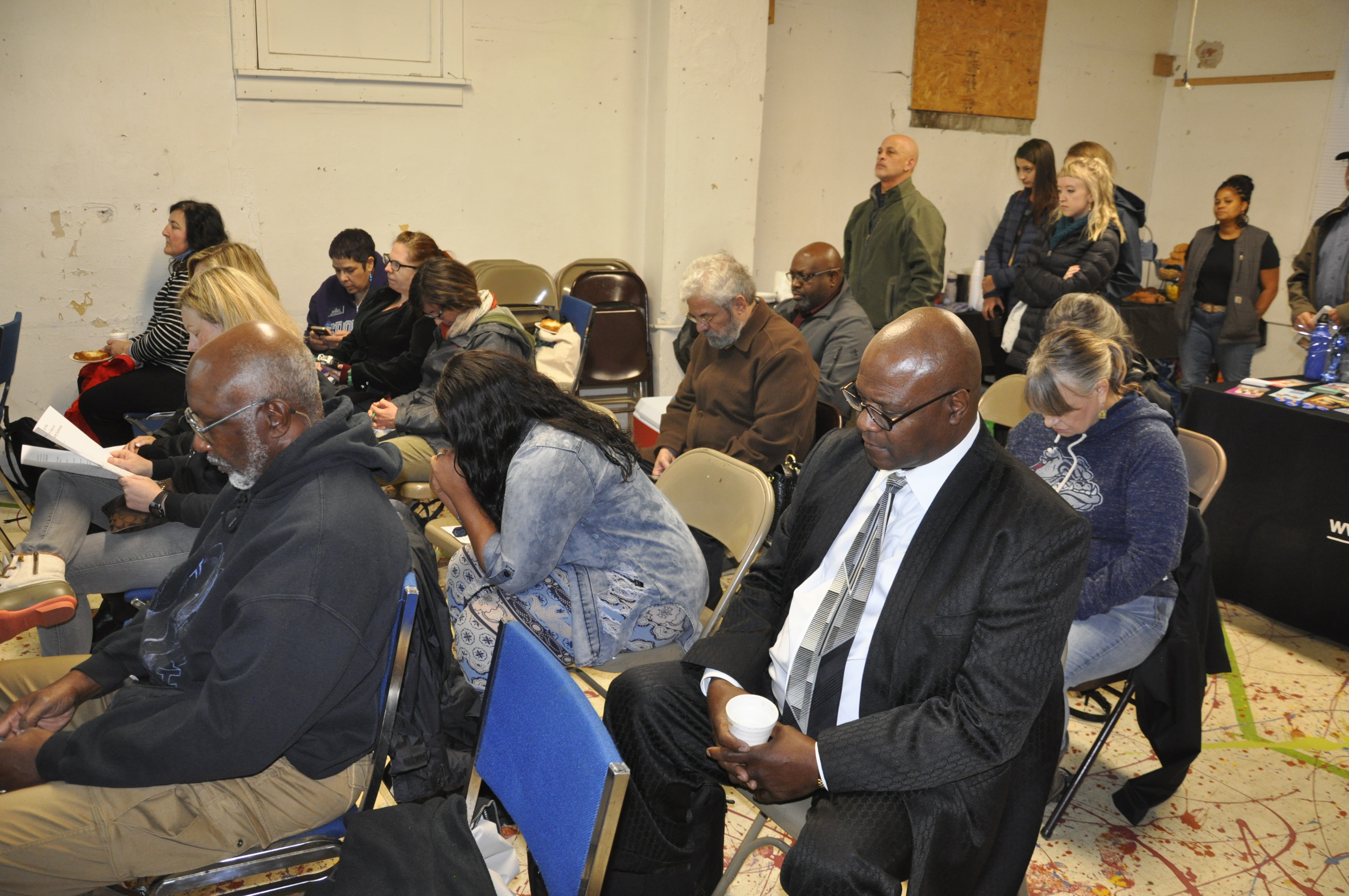
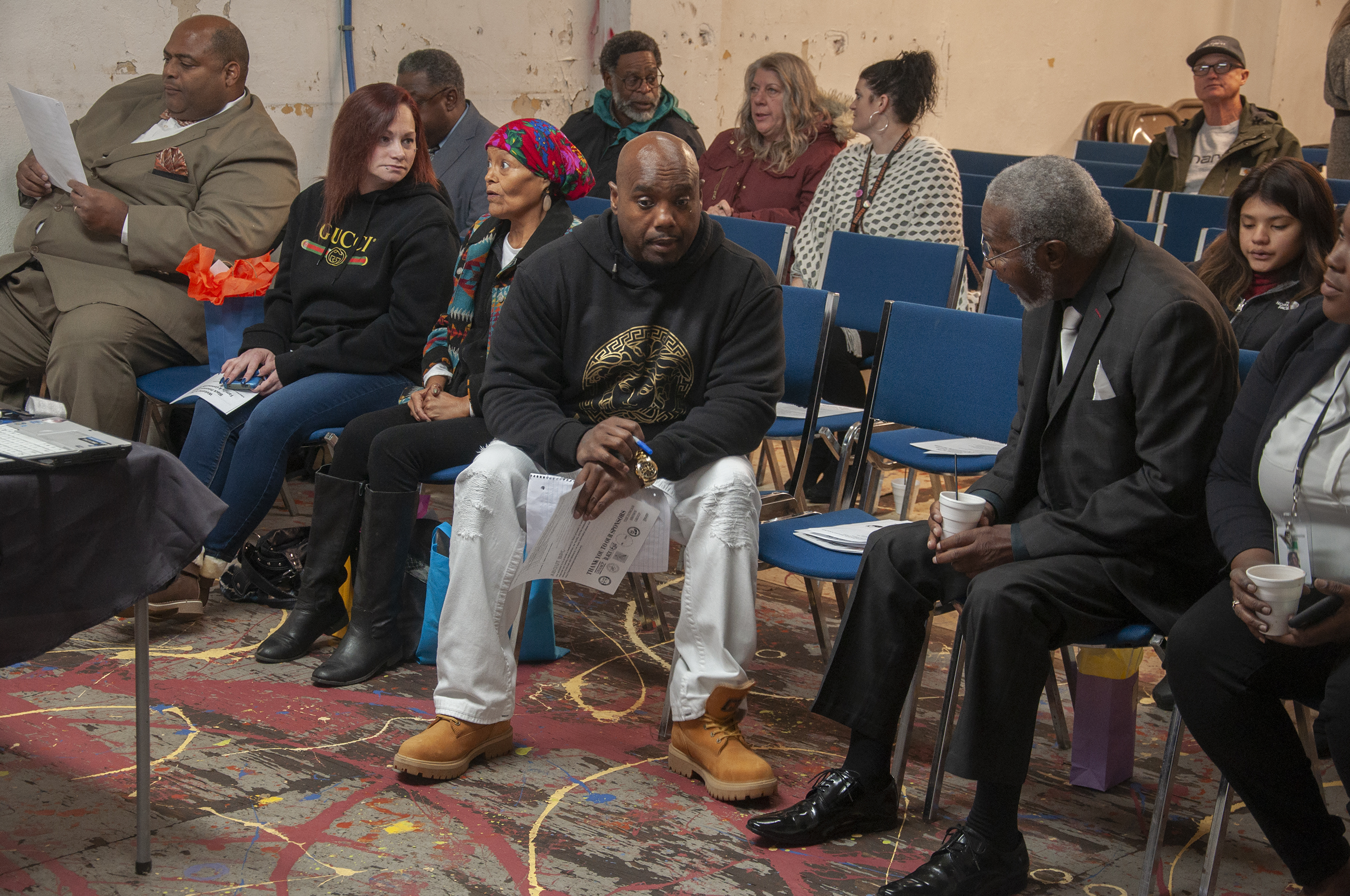
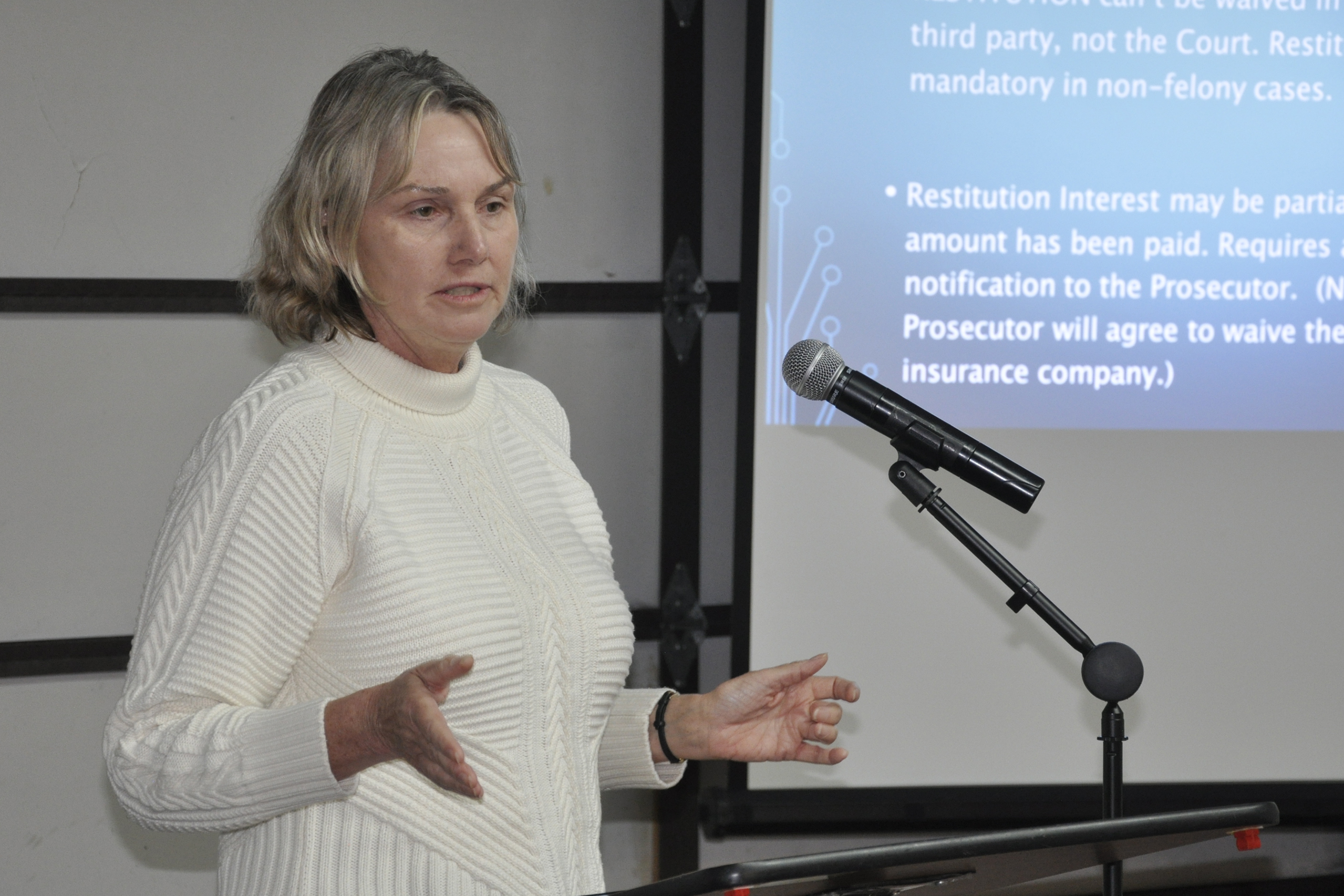
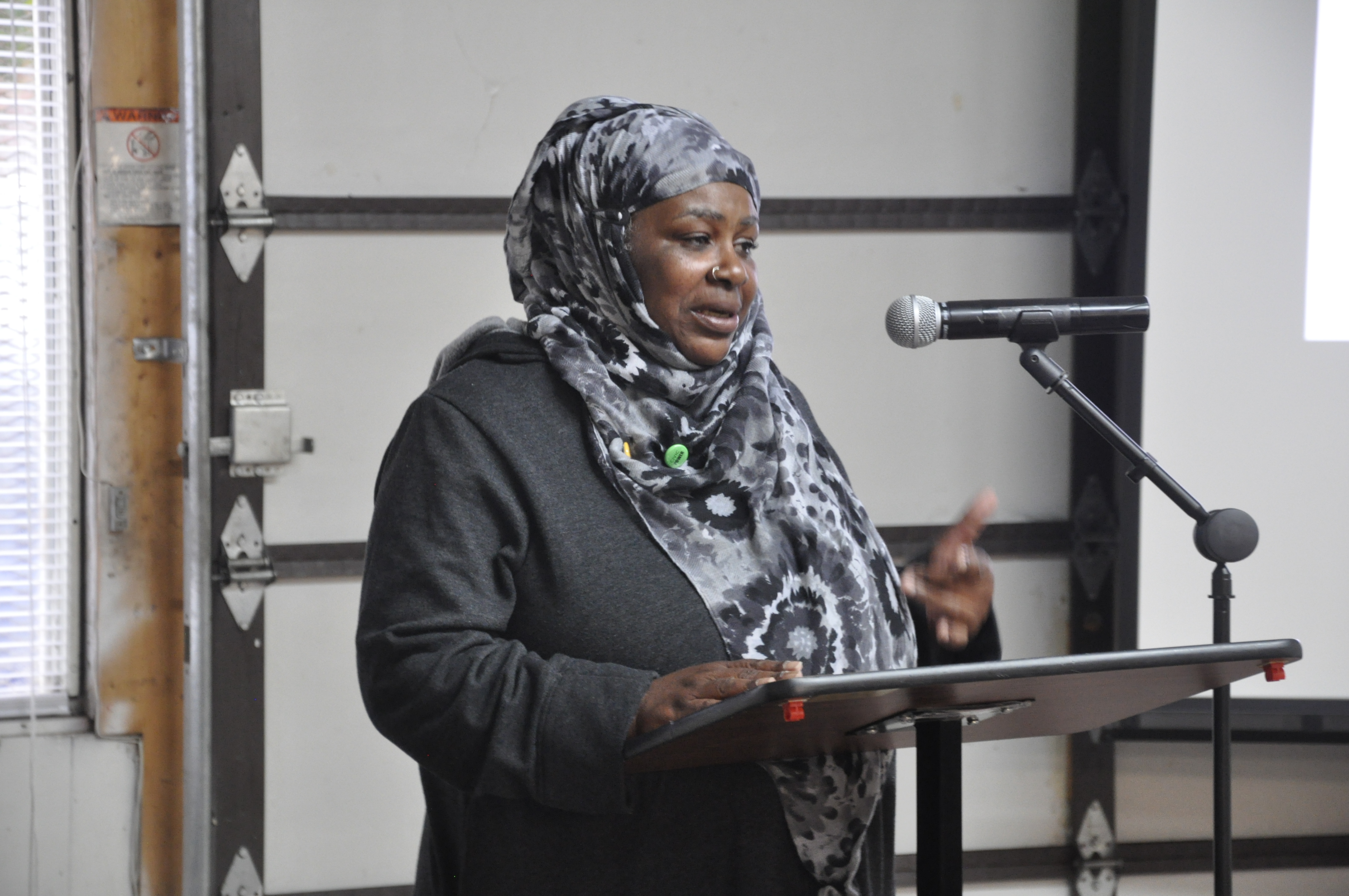
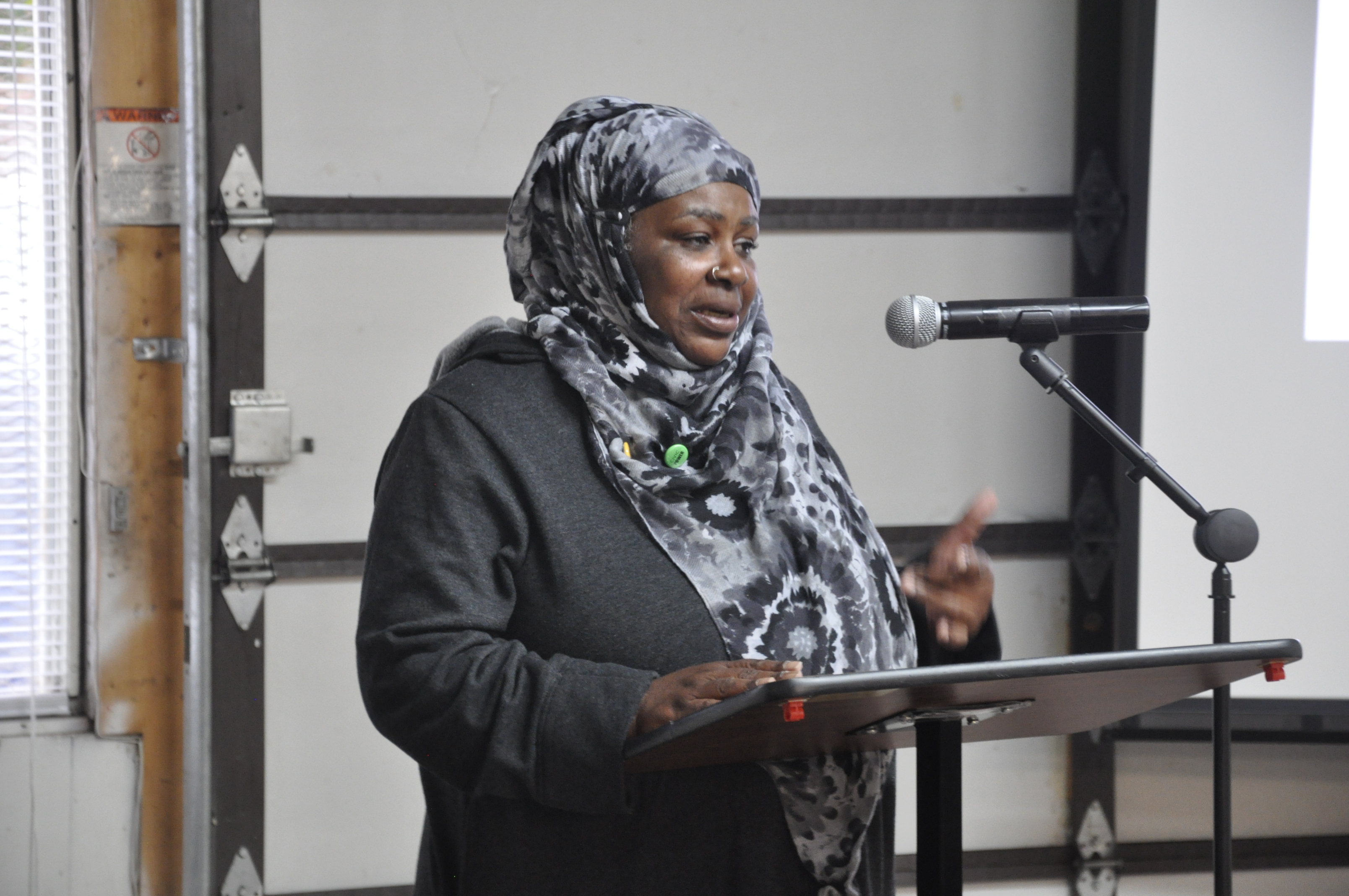
Duaa Williams organized this summit held at The Carl Maxey Center on September 28 2019 to bring the formerly incarcerated together with the communities they are still a part of. The goal is to bring “humanizing and fellowshiping” into the incarceration system, as NAACP President Kurtis Robinson said in an interview on KYRS radio:

http://kyrs.org/playlists/92319-kurtis-robinson-on-black-prisoners-caucus/

Building 100 Discussion Groups

We have all been to many meetings and rallies at the end of which no one knows what they can do.  If you participate in demonstrations, rallies and social media you need to go to your local coffee house and have a discussion with five to ten individuals about what you can do about racial and social justice and community development. Begin building the community you want to live in. We want to build 100 of these coffee discussion groups. You may want to come to one of these listed below. Or start your own and let us know. Be sure to invite someone from the affected classes.

There are now several First Thursday* Coffee and Discussion groups:

  • First Thursday Coffee & Discussion East Central Community Center 10 am (Resumes March 4, 2020) 500 S Stone
  • First Thursday Original Coffee & Discussion 10:00 am Clark’s Fork (meets 2nd & 4th Thursdays) 1028 N Hamilton St #100, Spokane, WA
  • First Thursday Evening Discussion 6 – 8 pm Location varies. TEXT (509) 934-3933 and ask for location.
  • African American Men’s Discussion TEXT (509) 934-3933 and ask for date, time, location.

*These groups originally started out on the First Thursday of each month. Now they meet on the dates and times established by each group.

Call to Participation

Those interested in racial and social justice
Those interested in community development
5-10 people meeting regularly for deep discussion
Willing to meet regularly to plan strategies and take actions

Contact TEXT (509) 934-3933 for more information.

Women’s History Month

Yes! We’re All In This Together

Indigenous People’s March Spokane 2019

Women’s March Spokane 2019

Martin Luther King Jr Day March 2019

Conscious / Cohesive / Connectivity

ORIGAMI

As with the ancient art of paper folding/shaping, we’re all in this together. 4comculture.com is a focused effort to guide and shape the good energies and efforts of various groups in Spokane into something singular, something beautiful, something wonderfully effective. With your permission and your help our goal is to be a one stop, centralized, trusted connection point for what’s happened, what’s happening and what we can do together to affect what happens in the future of our community. In this age of Facebook, Instagram, the Internet and Inboxes, there’s no excuse for “I didn’t know, I wasn’t aware, and I would’ve helped.”

Make a huge statement by clicking Contact Us in the menu under the banner above and typing “Yes I care” in the Subject line of the Contact Us box that appears, also sharing your name and email address. Part of our mandate, that we take very seriously, is to never abuse your trust, share your information or misuse your very very valuable time.

Build Common Ground! First Round

Images by Robert Lloyd, www.4comculture.com

The exhibition is a subtle reminder of where bigotry begins. I am placing myself outside my comfort zone in order to build my path to tolerance as an artist and a human being. I’ve often heard it said that we are all in this together.  Now I am seeking a consensus on where we can build common ground, around issues that we can support together. If you would like to help build a grassroots movement click on the image below and print it. Gather signatures and email addresses and mail them to: Robert Lloyd 3314 S. Grand Blvd. Spokane WA 99203.

Those of you in the Spokane area who have seen the show and would like to receive a print collect at least 25 signatures and email addresses and bring the list to the reception on Oct 4 4:30 – 6 pm at the JFK Library at Eastern Washington University. You will receive an unframed 11×14 matted print at the end of the show.