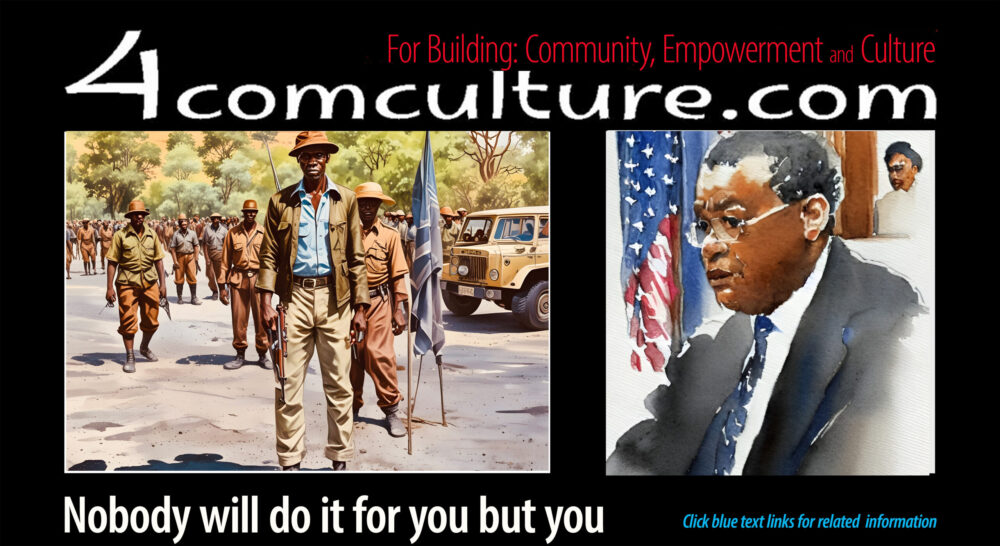
Spokane also has its share of those who are part of the African Diaspora, including Ugandans, Kenyans and South Africans. Quoting the article below “… many of her nationals went overseas to earn an education or seek greener pastures. Today, all these Ugandan sons and daughters are mockingly referred to as “Nkuba Kyeeyo”or Kyeyoists” crudely translated as “menial workers cleaning foreign streets for a living after leaving Uganda.” The author makes the point that this is not true. Some may have begun at such menial levels but many have taken advantage of every opportunity and become pharmacists, bankers, politicians, ambassadors, health administrators and media producers. They certainly are not “Nkuba Kyeeyo”!
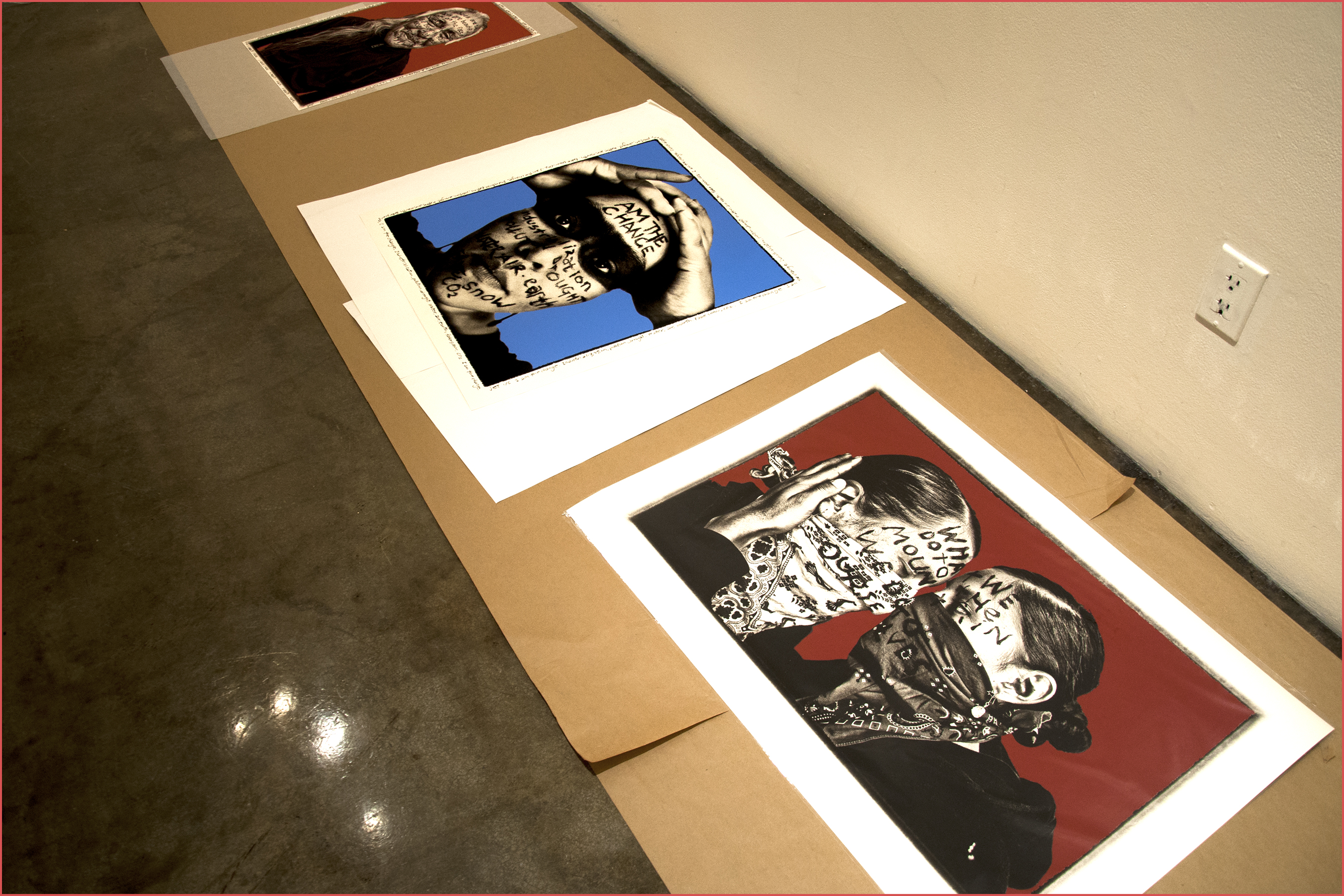
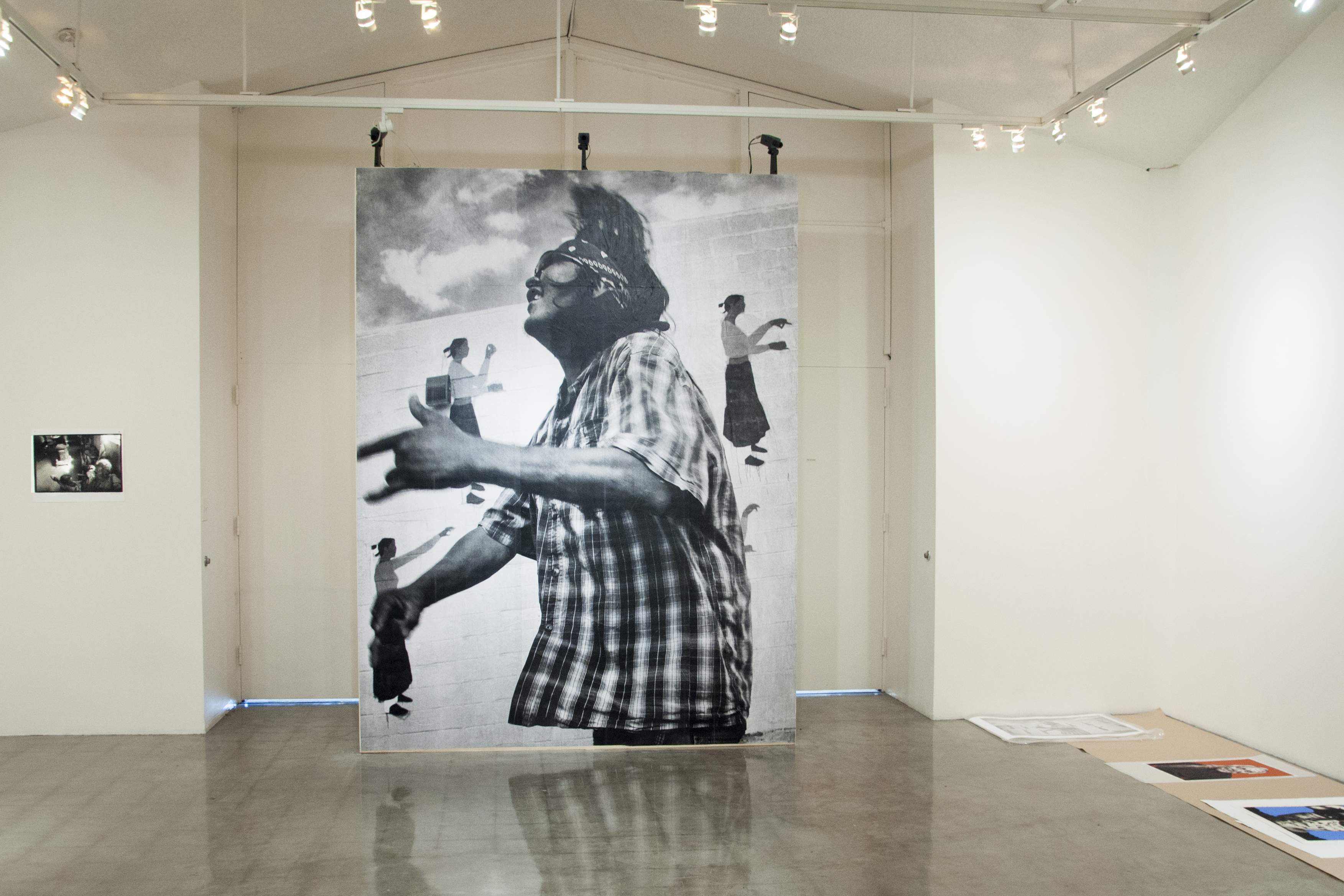
Anthony Boccaccio EXHIBIT AT INTERPLAYERS THEATER
INTERPLAYERS THEATRE 174 S. HOWARD ST. SPOKANE WA
Featuring internationally acclaimed photographer, artist and adventurer Anthony Boccaccio. Anthony began his photographic career with National Geographic Magazine in 1971. He has recently published a photographic book about the search for gold in the Amazonian Jungle.
Folks,
The opening of Tony’s exhibition was superb in so many ways. Tony, always
volubile and socially engaging, was in top form, greeting the numerous attendees and sharing anecdotes about the images and their creation. The images are wonderful, it is especially encouraging to view this exhibit here in Spokane. Chris Crisostomo, who modeled for several of the images, is a personable fellow who is exceptionally graceful in his movements and gestures… just a treat to see him at various times in the evening. No wonder Tony asked him to model.
If you missed the opening, please be aware that you can view the images any time during the day when the Interplayers box office is open… it is free and open to the public.
Amazing visions, excellently executed, you owe it to yourself to take the time…
Running, at least, through November.
Jay Cousins
Shiosaki Family Arrives in Spokane
By Patricia Bayonne-Johnson
Railroad and mine companies in the West had a severe shortage of laborers in the 1880s and 1890s so they reached across the Pacific to Japan to solve their problem. Thousands of healthy, strong, young Japanese laborers were recruited. Kisaburo Shiosaki was of the laborers who came to America and eventually ended up in Spokane.
Alfred Mutua Starts MachaWood
Spokane African American Voice’s editor and graduate of Whitworth and Eastern Washington University, Governor of Machakos County, Kenya, Dr. Alfred Mutua jump starts Entertainment Centre for Film, Media, Music and the Arts: Full Story
Don’t Vote Alone – Encourage Your Friends to Vote
Voting is the essence of democracy. Voting in the United States is voluntary. Some people vote in person at the polls, while others vote by mail days or weeks before the actual election date. Regardless of how you do it, it’s important that all U.S. citizens who qualify participate in the democratic process of electing public officials.
For information to assist you in locating and contacting your government officials visit the Speak Up and Out to Government page.
Educator & Sculptor Joe Daugherty Passes
Passed away August 27, 2013. Memorial service followed by reception Monday September 2 at 10:00 am Cheney United Church of Christ 423 N 6th St. Cheney WA. Online guestbook at cheneyfuneral.com.
Obituary from the Spokesman Review August 31, 2013.
Cheney lost a friend and an artist with the death of Joseph C. Daugherty August 27 2013. He was born in Uhrichsville, Ohio, May 24, 1921. He appreciated growing up in this railroad town where everyone was a friend. He was the artist of the Senior Class Annual and Drum Major of the band for his high school. He graduated from Ohio State University with a degree in Fine Arts in 1939. After serving three years in the U.S. Navy, he began teaching art in Woodland, California. Here he met and married a fellow teacher.
As with so many ex-military, he returned to college. His three years in the graduate art program at the University of Oregon included the creation of 13 sculptures. He also appreciated having a class with the world-famous artist, Alexander Archipenko.
In 1959 he joined the faculty of E.W.W. where he valued his many years working with the varied students who attended the school. He also created a facility for bronze-casting in the art building which reflected his work in a new media. Wherever he lived, he fashioned an area where he worked, creating sculpture. At last, in 1964, the house he designed and had built included a permanent studio.
Among his many interests, he enjoyed spending time in good conversation and was a wonderful story-teller. He entertained listeners with recollections of his travels and past, filled with details provided by his amazing memory and sense of humor. He also loved music, especially the music from the swing/big-band era, and spent many happy hours listening to his favorite compositions. He was, above all, thoughtful, kind and courteous.
He is survived by his wife of 67 years Joan; and son Kevin, of Cheney; and daughter Colleen and husband Ken Floyd, of San Diego. Also living are his sisters Ann Baxley of San Marcos, California and Clara and husband John Updike of Muncie, Indiana. Also adding to relative wealth are nephews Brian and Bruce Baxley, California, and Phil and Tom Updike, Indiana, and niece Carolyn Dehner, Ohio.
A memorial service, followed by a reception, will be held on Monday, September 2, at 10:00 am at the Cheney United Church of Christ, 423 N. 6th Street, Cheney, Washington 99004. Online guestbook at cheneyfuneral.com. Cheney Funeral Chapel, Cheney, WA.
Tribute To Edward Thomas, Jr
An Event That Inspired The National
Dear Yale Students and Extended Community,
Fifty years ago today our country experienced arguably the most important mass movement in US history refered to as the March on Washington for Jobs and Freedom or the Great March on Washington. Ironically, the 50th anniversary lands on the exact day of the week, more importantly the nation’s first African American president will deliver the address.
It was this event (and others) that inspired the National and her young leaders in institutions of higher learning to make a profound difference.
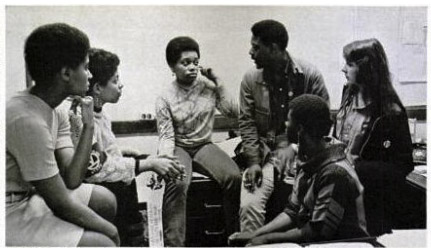
In 1964 the Yale discussion group on Negro Affairs was formed as the University witnessed a significant (14) influx of black freshmen. By 1966 the Black Student Alliance at Yale (also known as B.S.A.Y. or BSAY) was established to expand the voice of black students at Yale.
The following year (1967) BSAY would sponsor a conference on Black Power in the midst of social unrest and rioting in New Haven. By 1968 BSAY would expand the conversation and host a symposium entitled “Black Studies in the University” in order to explore “the intellectual value and relevance of studying and teaching the Black Experience … to their respective communities.”
This symposium hosted individuals such as Harold Cruse (author of The Crisis of the Negro Intellectual) , Maulana Karenga, Alvin Pouissant, Gerald McWorter (Sociology Department,Fisk) and others. The proceedings of the symposium would later be collected in a published volume and edited by Yale students Armstead L. Robinson, Craig C. Forster and Donald H. Ogilvie. By mid-year (1968) a committee of students and faculty organized and called for a major in Afro-American Studies.
September (1968) ushered in the largest number of black students (70) to enter Yale, almost double the number the prior year. By December of 1968 the Yale faculty approved the Afro-American Studies program and major. The major would be offered for the first time in September 1969. Arna Bontempts (noted American poet of the Harlem Rennaisance) would serve as a visiting professor at Yale. The year 1969 also introduced co-education to Yale.
As the 1960s ended a new era of activism kicked of the 1970s with the Black Panther trials (April/May 1970) in New Haven and the creation of the Chubb Conference on the Black Woman organized by Sylvia Ardyn Boone (Yale professor of Art History) and Vera Wells, ’71.
The conference featured a speech entitled “Third World Women” by Shirley Graham DuBois (writer and wife of noted intellectual W.E.B. DuBois). Other notables such as Maya Angelou, Gwendoyn Brooks and John Henrik Clarke were in attendance.
Today is a time to reflect and challenge a new generation of young people to stand tall as thought leaders and solid citizens. John Henrik Clarke reminds us that history is a current event. Let us all be mindful of today’s Anniversary and continue to make history.
Sincerely,
Dean Rodney T. Cohen
Afro-American Cultural Center at Yale
50th Anniversary March on Washington
There will be many similarities between the 50th anniversary March on Washington this August 24th, and the original march that took place in 1963.
Thousands of civil rights activists and leaders will convene on Washington D.C., and march for civil rights, civil liberties, voting rights and economic freedom and equality for all.
But one thing will be different. Whereas 50 years ago, those not in attendance could only be with the marchers in spirit, this year, people who can’t make it to Washington will still have a chance to be active participants.
Be a part of our virtual march by sending a message of support through Facebook or Twitter on Saturday.
The NAACP is giving supporters all across the country a chance to be a part of this historic event in their own homes and communities.
And I don’t have to tell you how important it is to help us spread our message. We’ve made so much progress fighting for civil rights and human rights, but there is much work still to do.
I know you’ve been a big part of our work in the past. Help us take another step for freedom and equality. Be a virtual marcher on August 24th:
http://action.naacp.org/MOW-thunderclap
Thank you, and remember, courage will not skip this generation.
Roslyn M. Brock, Chairman
NAACP National Board of Directors