Happy Father’s Day

Today, I want to speak directly to you—the children of fathers. Maybe you’re a teenager, or maybe you’re in your twenties, still figuring out life, still piecing together the meaning of fatherhood. Let’s take a moment to think about what it truly means to be a father—not just a provider of DNA but someone who shapes, protects, and nurtures.  

I had an absentee father. He wasn’t there to support my mother or guide me. That absence shaped me in ways I didn’t fully understand until much later. I began to reverse-engineer him—to think about what he failed to do and what I could do differently. It’s made me reflect deeply on fatherhood, and I want to share some thoughts with you today.  

A Salute to Real Fathers 

Let’s take a moment to honor the real fathers. Not sperm donors, but fathers. Men who were there for their children, who stayed, who sacrificed, who showed up when it mattered most. These are the men who deserve our gratitude today.  

Fatherhood isn’t about perfection. It’s not about always having the answers. It’s about love, effort, and showing up—even when it’s hard, even when the world feels like it’s against you.  

The Stories of Absence 

But we also need to talk about the fathers who weren’t there. Not to shame them, but to understand. Sometimes, absence has a story.  

– There are fathers who fled their countries in the middle of the night, hoping to prepare a better life for their families, only to find it wasn’t as easy as they thought.  

– There are young fathers—teenagers—who weren’t ready, who lacked the resources, the knowledge, or the support to step up.  

– There are fathers forced out by systemic barriers—government policies that made them feel like their families would be better off without them because they couldn’t provide.  

– There are men caught in the charisma of leaders, entertainers, or movements that pulled them away from their responsibilities.  

And yes, there are men who simply made poor choices, who let fear, shame, or immaturity dictate their actions. They left, and their absence left scars.  

But here’s something to think about—you exist because of them. Maybe that’s the only thing they gave you, but it’s not insignificant. You’re here, alive, with the chance to write your own story, to break cycles, to make better choices.  

Fathering Takes Many Forms  

Sometimes, fathering doesn’t come from a biological parent. Fathering can come from a community. It might have been your mother who played both roles. It might have been a coach, a teacher, a mentor, a neighbor, or even a church or community organization that gave you the love, security, and guidance you needed.  

Fathers come in many forms, and their stories are just as diverse. To truly understand fatherhood, we need to hear all these stories—the good, the bad, and the complicated. Only then can we prepare future generations to make better choices, to understand the weight of fatherhood, and to embrace it with open hearts.  

A Challenge to Reflect 

So, I challenge you to think about your own father. Maybe he was there, and maybe he wasn’t. Maybe you’re grateful, or maybe you’re angry. Whatever your feelings, use them. Let them guide you in understanding what kind of person you want to be.  

And if you ever become a father yourself, remember that fatherhood isn’t about being perfect. It’s about showing up, even when it’s hard. It’s about making the choice to love, to care, and to try, every single day.  

Final Thoughts 

To all the fathers who stayed, who sacrificed, who loved unconditionally—thank you. To the fathers who left, for whatever reason—your absence has shaped lives, too, and those stories matter. And to the children of fathers, I hope this message sparks reflection, conversation, and ultimately, growth.  

Fatherhood is complex, but it’s also one of the most powerful forces in the world. Let’s honor it, question it, and strive to understand it—so that future generations can do it better.  

Speak Up For The Least Of Us

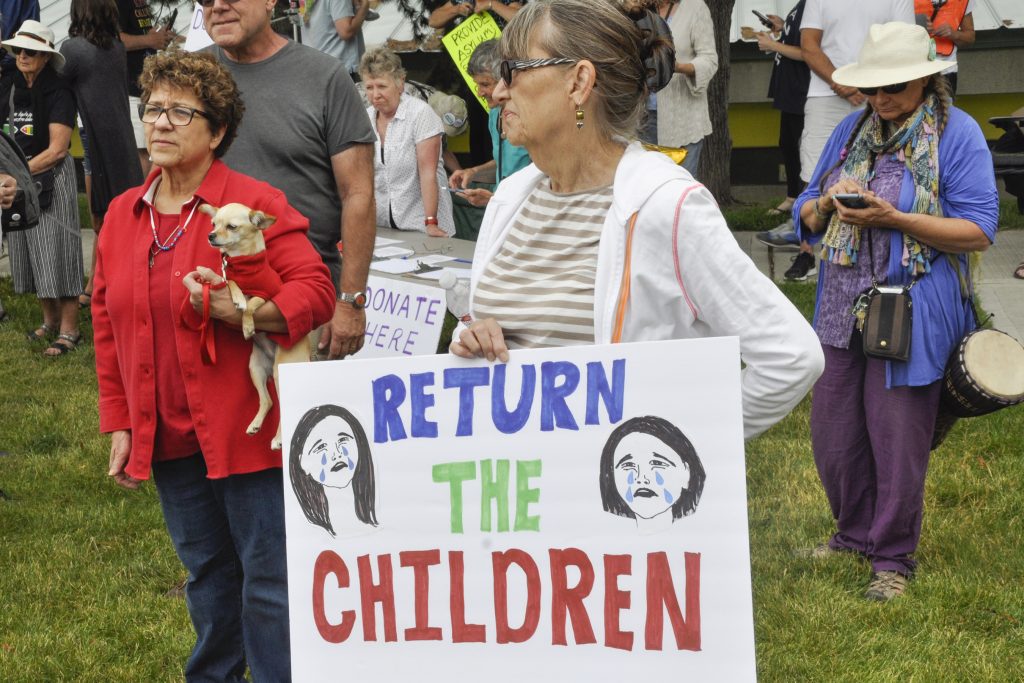
They rally, they’re marching, they’re resisting. Join them NOW! Trump may come for you tomorrow. Come have coffee with us and discuss future programs of action to build a community we want to live in. 10 am the First Thursday of each month at the East Central Community Center  500 S. Stone Street.

What We Did March 24 In Seattle

March For Our Lives Seattle WA


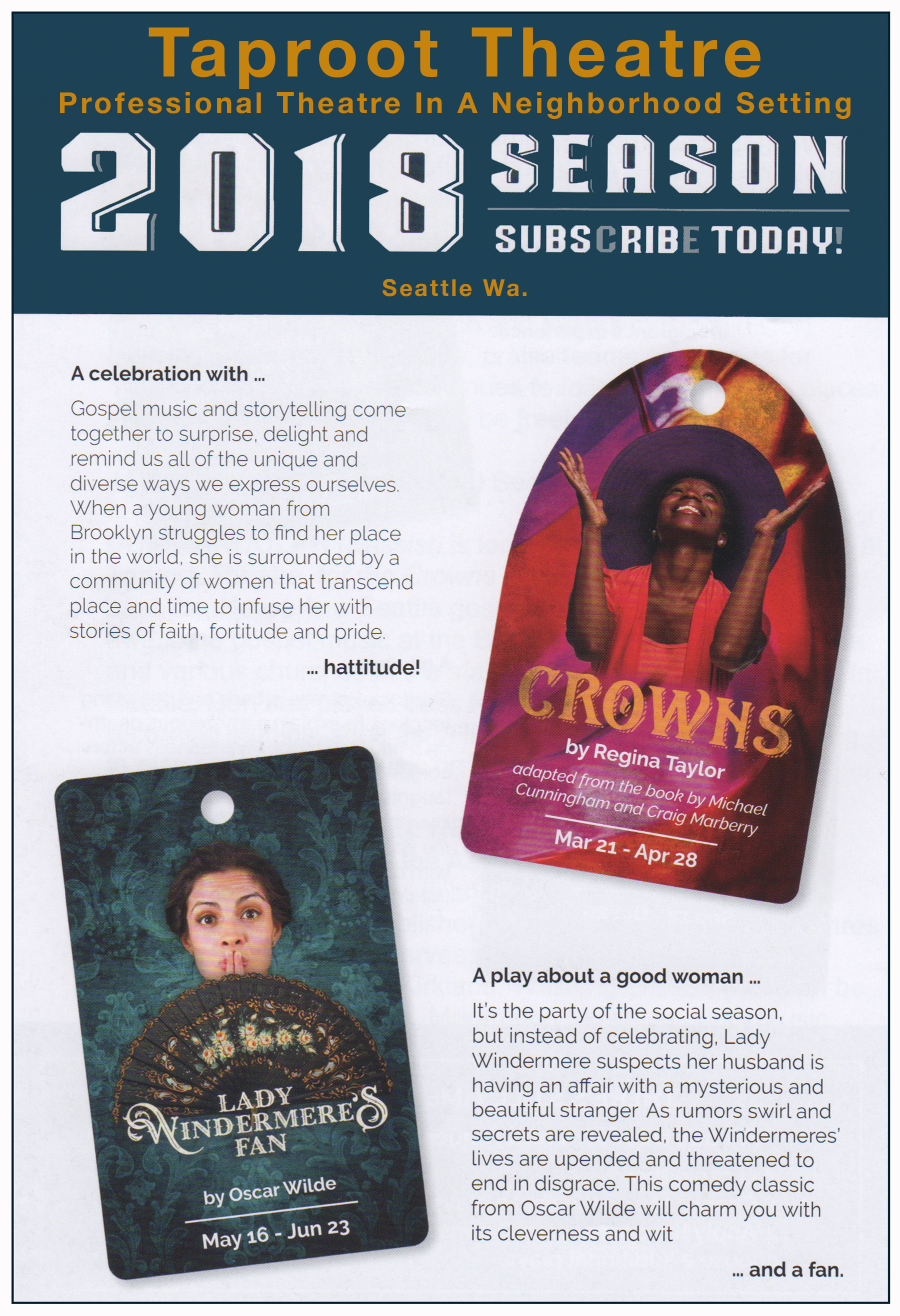
CROWNS by Regina Taylor

Taproot Theatre Company


How I See It: Hate starts and ends in your home

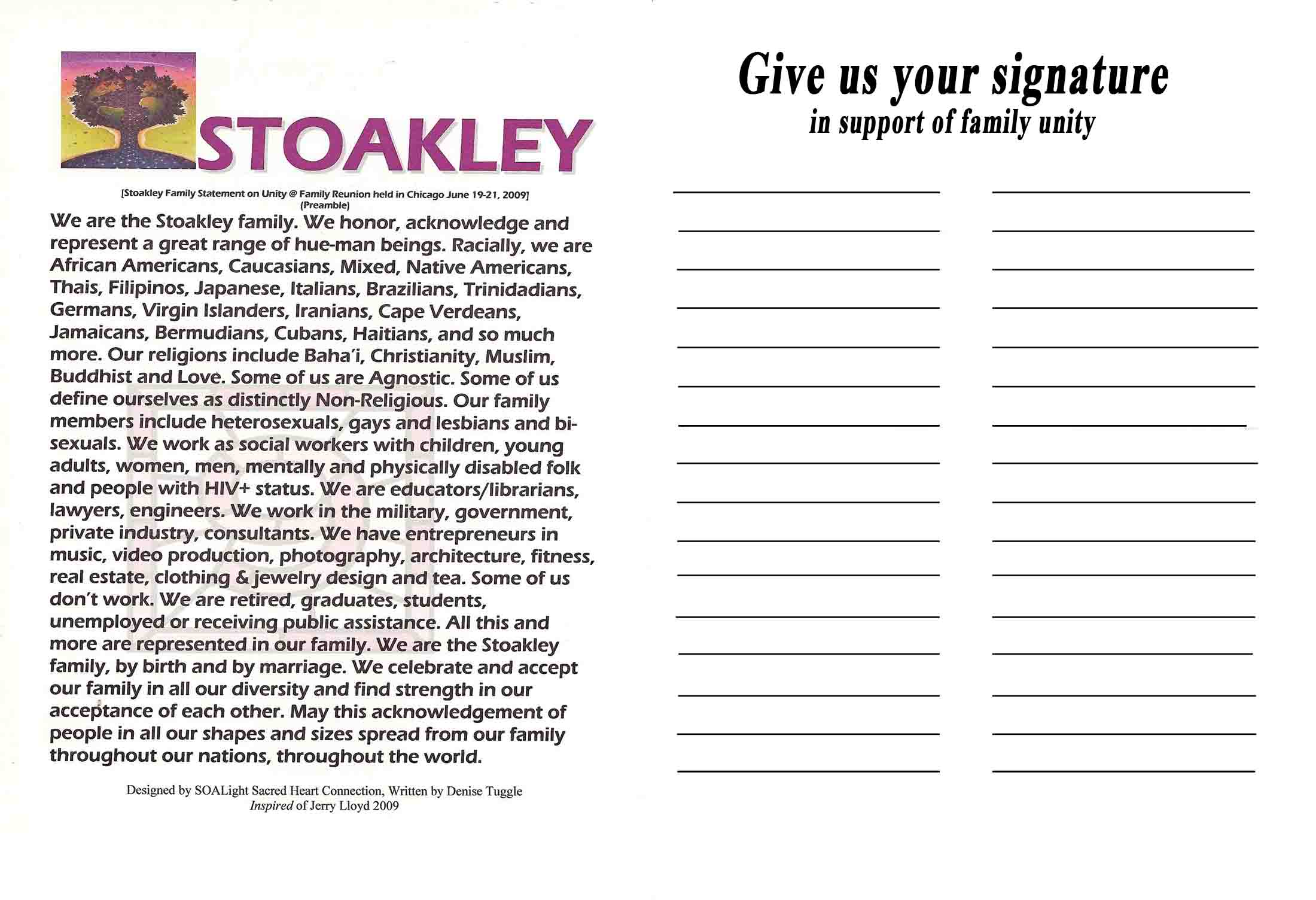
This weekend we will  be at your family reunion. They will be asked to sign this statement on family unity. What if you asked your families and Online friends to join the Stoakley’s we can change the world.

The Sound Bites Now The Book

← Back

Thank you for your response. ✨

“I Blame Yo Mama”

Oh yes, I say we should. You say “don’t talk about yo mama”. Yea I know those are fighten’ words, but read THE ROOT article and we can fight afterwards.

When Bad Parenting Affects Good People

Was Nancy Lanza’s poor judgment the root cause of her son’s shooting spree in Newtown, Conn.?
  • By: Nsenga K. Burton, Ph.D. | Posted: December 28, 2012 at 12:23 AM

http://www.theroot.com/views/when-bad-parenting-affects-good-people?page=0,1
(The Root) — The massacre at Sandy Hook Elementary School in Newtown, Conn., is still at the top of the news cycle, weeks after Adam Lanza, 20, murdered 20 unsuspecting schoolchildren and six teachers and administrators with weapons purchased by and registered to his mother, Nancy Lanza. The young man shot her in the head four times in her home as she slept before heading to Sandy Hook to embark on the second-deadliest school massacre in U.S. history.

Nancy, described as a gun enthusiast, has become the recent object of fascination, with many wondering why she would keep guns in her house at all and take her son to the shooting range, knowing that he was “troubled.”

While I’m not interested in embarking on a “blame the mother” narrative, particularly when very little is known about the Lanza family dynamics (i.e., Adam’s relationship with his father, brother, grandparents and so on), I do think that Nancy’s actions are indicative of a practice that I call “when bad parenting happens to good people.” (In this case, “good people” could refer to Nancy or the victims of the Newtown shooting.)

It’s a reality seen as pretty much standard by people who work with or are regularly exposed to children and young adults. It is the idea that common sense isn’t always common, especially when it comes to parenting. As a college-level educator, I have the opportunity to see great parenting and bad parenting, up close and personal.

There are all types of parents, with diverse ideologies, philosophies, worldviews and approaches to parenting. Some take a laissez-faire position, allowing their children to explore and experience college life without much interference or direction. Other parents have a hands-on approach, staying in constant contact with their children and dictating nearly every movement they make.

It’s obvious when parents have taught their children boundaries, self-control, integrity and a sense of responsibility for their actions. Meanwhile, it seems as if other parents have not taught their kids much of anything — such as to speak when spoken to, which in my book constitutes having basic manners.

Some parents do so much for their children that those students have difficulty making a simple decision (e.g., going to class instead of sleeping in), let alone accepting the consequences of poor decision-making (e.g., sleeping in instead of going to class). I have learned that, like professors, not all parents are created equal, and each one has a different parenting style — one that may not necessarily work for the rest of the world.

Nancy Lanza is an example of this phenomenon. Her poor judgment and profound lack of common sense as a parent (keeping guns around a “troubled child”) had tragic consequences for a lot of people, including herself. To be clear, not all children with Asperger’s syndrome are dangerous, but parents who are overwhelmed and in over their heads (dealing with children they are not trained or equipped to handle) certainly are troubled and in need of help. Parenting doesn’t come with a manual, which is why parenting classes exist.

You don’t have to be a school psychologist or a college professor to identify everyday examples of bad parenting. Head to the local grocery store or department store, or spend a few minutes at the airport waiting for a flight, and you’ll see that good parents are not born; like good children, they are made.

While some cultural critics are willing to try to find the correlation between bad deeds and either guns or exposure to violence in media, some aren’t as willing to explore the correlation between the rise in violent acts among young adults and the type of parenting they receive. Why?

Maybe it is because many of us would find our own parenting styles implicated. What happened in Sandy Hook and continues to happen in Chicago and other cities teeming with violent crime has to be dealt with on multiple levels, and parenting or the lack thereof should not be left out of the equation. Otherwise I fear we’ll continue to see examples of bad parenting happening to good people, long after the tragedy in Newtown stops being a hot news story.

My Parents Were Revolutionary: Chuck Worthy

“My Parents Were Revolutionary” is an exploration of the life lessons and concepts taught by Charles  E. Worthy Sr. and Helen A. Shaw Worthy to Chuck Worthy and his sisters when they were growing up.


Click here for Chuck Worthy’s story about his parents.


 Also read his essay The Great Ones:

“We call them Slaves and yes they were bound in slavery, born and lived and died in slavery but oh how Great They Were!! “


A Jewish Christmas Story

This Christmas story was forwarded to me and I laughed. I thought about posting it here. But I didn’t think it was politically correct. So I googled the story and found that it was published online by The Jewish Magazine. When I laughed I wasn’t laughing at little Jimmy Cohen but at the irony of spending so much money on toys for our children. Wouldn’t it be great if instead we opened up a savings account for them, bought educational software, clothes or books?

A Jewish Christmas Story

The teacher was very curious about how each of her students celebrated Christmas Eve “Tell me Patrick, what do you do on Christmas Eve?” she asked.

Patrick addressed the class. “Well Miss, me and my twelve brothers and sisters go to midnight Mass and we sing hymns, then we come home very late and we put mince pies by the back door and hang up our stockings. Then all excited we go to bed and wait for Father Christmas to come with all our toys.”

“Very nice Patrick, now Jimmy Brown, what do you do?”

“Well Miss, me and my sister go to Church with Mum and Dad and we sing carols and we get home ever so late. We put cookies and milk by the chimney and we hang up our stockings. We hardly sleep waiting for Santa Claus to bring our presents.”

Remembering there was a Jewish boy in the class and not wanting to leave him out of the discussion, she asked, “Now Jimmy Cohen, what do you do on Christmas Eve?”

“Well Miss, it’s the same old thing every year. Dad comes home from the office. We all pile into the Rolls and drive to his toy factory. When we get inside we look at all the empty shelves and sing “What a friend we have in Jesus”. Then we go to the Bahamas.”

Jewish Humor and Joke page

The Jewish Magazine http://www.jewishmag.com/97mag/humor/humor.htm

Miss Devine

Cousins James Ransom and Cherie Johnson recall their fearsome Sunday school teacher, Miss Lizzie Devine, the only woman who had more power than their grandmother. Set in the small Florida town of the cousins’ memories, this animation resounds with the joy of sharing stories with family.

Directed by: The Rauch Brothers
Backgrounds: Bill Wray
Producers: Mike Rauch & Isaac Kestenbaum
Animation: Tim Rauch
Audio Produced by: Katie Simon